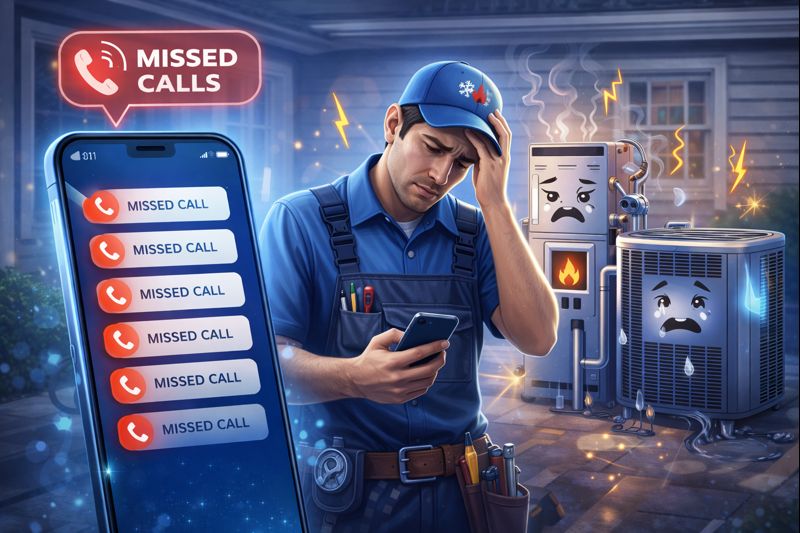

The plumbing industry operates in a world of urgency and unpredictability. Unlike many service businesses, plumbing emergencies don't follow a schedule. A burst pipe doesn't wait for business hours. A backed-up sewer doesn't care that it's a holiday weekend. When homeowners face water damage, no hot water, or sewage backup, they need immediate help—and they'll call the first company that answers.
This urgency creates both opportunity and challenge. The opportunity: plumbing companies that answer every call, especially emergencies, can capture premium pricing (often 20-30% above standard rates) and build customer loyalty that lasts for years. The challenge: maintaining 24/7 availability with human staff is prohibitively expensive, and even the most dedicated plumbers need sleep.
AI phone answering systems are solving this impossible equation. By combining advanced voice AI technology with plumbing industry expertise, these systems provide intelligent, empathetic, and always-available call handling that never misses a call, never takes a break, and never loses a lead. This guide explores how AI phone answering is transforming plumbing businesses, from the technology behind it to real-world implementation strategies that drive measurable results.
In This Comprehensive Guide:
- 1. The Plumbing Call Crisis
- 2. Understanding Plumbing Call Urgency
- 3. The True Cost of Missed Plumbing Calls
- 4. How AI Phone Answering Works
- 5. Essential Features for Plumbing
- 6. Handling Plumbing Emergencies
- 7. Lead Qualification and Booking
- 8. Implementation Roadmap
- 9. ROI: Financial Impact
- 10. Best Practices
- 11. Integration with Plumbing Software
- 12. Frequently Asked Questions
Section 1: The Plumbing Call Crisis - Why Every Call Matters
Plumbing businesses face a unique challenge: their customers' problems are often urgent, expensive, and emotionally charged. Understanding this dynamic is crucial to appreciating why AI phone answering is transformative for the industry.
1.1 The "First Answer Wins" Reality
Research in emergency services shows that when customers face urgent plumbing issues, they don't call one company and wait. They call 3-5 companies simultaneously and book with whoever answers first. This "first answer wins" dynamic means:
- Speed is Everything: Answering in 10 seconds vs. 30 seconds can be the difference between booking and losing the job
- Availability is Competitive Advantage: Companies that answer after hours capture 35-40% of calls that competitors miss
- Every Missed Call is Revenue Lost: There's no "second chance" with emergency calls—customers book elsewhere immediately
A study by Harvard Business Review found that companies that respond to leads within 5 minutes are 100 times more likely to connect with decision-makers than those who wait 30 minutes. In plumbing, this multiplier is even higher because of the urgency factor.
1.2 The After-Hours Opportunity
Plumbing calls don't follow business hours:
- 35% of calls happen after 5 PM—when most businesses are closed
- 20% happen on weekends—when staffing is minimal
- 15% happen between 10 PM and 6 AM—when no one is answering
These after-hours calls are particularly valuable because:
- They command premium pricing (20-30% above standard rates)
- They're true emergencies (higher job values)
- They create strong customer loyalty (you solved their crisis)
Companies that miss these calls are leaving $50,000-$150,000 annually on the table.
1.3 The Emotional State of Plumbing Customers
Understanding customer psychology is crucial. When someone calls a plumber, they're often in a state of:
- Stress: Water damage, no hot water, sewage backup
- Urgency: Need immediate solution
- Vulnerability: Don't know what's wrong or how much it will cost
- Low Patience: Will hang up after 3-4 rings if no answer
AI phone answering systems are trained to recognize this emotional state and respond with empathy, urgency, and professionalism—exactly what stressed customers need.
Section 2: Understanding Plumbing Call Urgency - The Classification System
Not all plumbing calls are equal. Effective AI systems must distinguish between true emergencies and routine service requests.
2.1 Emergency Classification
Plumbing emergencies require immediate response (within 1-2 hours):
- Burst Pipes: Active water damage, potential flooding
- Sewage Backup: Health hazard, property damage
- No Water: Complete loss of water service
- Gas Leaks: Safety emergency, requires immediate attention
- Water Heater Failure: No hot water (especially in winter)
- Overflowing Toilets: Active flooding, property damage
AI systems must recognize these keywords and phrases, prioritize them, and route to on-call technicians immediately.
2.2 Urgent Classification
Urgent calls need same-day service (within 4-8 hours):
- Slow drains (multiple fixtures)
- Low water pressure
- Leaking fixtures (not flooding)
- Water heater issues (some hot water still available)
- Running toilets (wasting water/money)
2.3 Routine Classification
Routine calls can be scheduled (within 24-48 hours):
- Single slow drain
- Fixture installation
- Preventive maintenance
- Non-urgent repairs
- Quotes for future work
AI systems should handle routine calls completely, booking appointments without human intervention.
Section 3: The True Cost of Missed Plumbing Calls - The Math
Let's quantify the financial impact of missed calls for a typical plumbing company.
3.1 Direct Revenue Loss
For a mid-size plumbing company (5-10 technicians):
- Monthly Calls: 250-400 calls
- Missed Call Rate: 35% (industry average)
- Missed Calls: 87-140 calls/month
- Average Job Value: $600-$1,200
- Conversion Rate (Missed): 5% (call back later)
- Conversion Rate (Answered): 40%
Calculation:
- Missed calls: 100 calls/month
- Lost bookings: 100 × (40% - 5%) = 35 bookings/month
- Average job: $900
- Monthly lost revenue: $31,500
- Annual lost revenue: $378,000
This is conservative—emergency calls often have higher values ($1,500-$3,000).
3.2 The Premium Pricing Loss
After-hours and emergency calls command premium pricing:
- Standard Rate: $150/hour
- After-Hours Rate: $200/hour (33% premium)
- Emergency Rate: $250/hour (67% premium)
If 35% of calls are after-hours and you're missing them:
- After-hours calls: 35% of 100 missed = 35 calls
- Average emergency job: $1,500
- Premium lost: $1,500 × 30% = $450 per job
- Annual premium lost: $189,000
3.3 Lifetime Value Loss
Plumbing customers have high lifetime value:
- Average customer: $2,000-$5,000 over 5 years
- Includes: Emergency repairs, maintenance, replacements, referrals
- Lost customers: 35/month × 12 = 420 customers/year
- Lifetime value: 420 × $3,500 = $1,470,000
The true cost of missed calls extends far beyond the immediate job.
3.4 Reputation Damage
Missed calls create negative reviews:
- 40% of negative reviews mention "no answer" or "voicemail"
- Each negative review costs 30 potential customers
- 10 missed emergency calls/month = 4 negative reviews
- Cost: 120 lost customers × $3,500 = $420,000 annually
Section 4: How AI Phone Answering Works - The Technology
AI phone answering systems use advanced technology to handle plumbing calls intelligently.
4.1 Natural Language Understanding
AI systems understand natural conversation:
- Intent Recognition: "My pipe burst" = emergency
- Context Awareness: Remembers information throughout conversation
- Entity Extraction: Identifies address, problem type, urgency
- Sentiment Analysis: Recognizes stress and responds with empathy
Example:
Customer: "Oh my god, there's water everywhere! The pipe under my sink just burst and it's flooding my kitchen!"
AI: "I understand this is an emergency. Let me get you help immediately. First, can you shut off the water at the main valve? I'm connecting you with an emergency plumber right now who can be there within an hour."
The AI recognized: emergency, urgency, location (kitchen), and took immediate action.
4.2 Emergency Detection and Prioritization
AI systems are trained to detect emergencies through:
- Keyword Recognition: "burst," "flooding," "emergency," "urgent"
- Voice Tone Analysis: Detects stress and panic in voice
- Context Clues: "water everywhere," "no water," "sewage"
- Question Patterns: "How fast can you get here?" = emergency
When an emergency is detected, the AI:
- Immediately acknowledges the urgency
- Provides safety instructions if needed
- Routes to on-call technician with full context
- Sends SMS/email confirmation
4.3 Intelligent Routing
AI systems route calls based on:
- Urgency Level: Emergency → on-call, Routine → scheduling
- Service Type: Drain cleaning vs. water heater vs. repiping
- Location: Routes to nearest available technician
- Customer Type: Existing customer → account manager
- Job Size: Large project → sales team
4.4 24/7 Availability
AI systems never close:
- Answer calls 24/7/365
- Handle peak volumes without additional cost
- Never take breaks, call in sick, or have bad days
- Consistent quality every single call
Section 5: Essential Features for Plumbing Businesses
Effective AI phone answering for plumbers requires specific features.
5.1 Emergency Detection and Response
Must instantly recognize and prioritize emergencies:
- Keyword detection (burst, flood, emergency, urgent)
- Voice stress analysis
- Immediate routing to on-call technician
- Safety instruction provision
- Confirmation and follow-up
5.2 Service Type Qualification
Must identify specific plumbing services:
- Drain cleaning and sewer services
- Water heater repair and replacement
- Pipe repair and repiping
- Fixture installation and repair
- Leak detection and repair
- Bathroom and kitchen plumbing
- Water line and sewer line services
This ensures the right technician with the right skills is dispatched.
5.3 Location and Service Area Verification
Must verify service area coverage:
- Get complete address
- Verify service area coverage
- Calculate travel time
- Route to nearest technician
- Handle out-of-area requests gracefully
5.4 Pricing Transparency
Must provide clear pricing information:
- Service call/diagnostic fee
- Hourly rates (standard, after-hours, emergency)
- Common service price ranges
- Financing options for large jobs
- Warranty information
5.5 Appointment Scheduling
Must schedule appointments intelligently:
- Real-time availability checking
- Time slot options (morning, afternoon, evening)
- Same-day availability for urgent calls
- Recurring maintenance scheduling
- Automatic reminders
5.6 Customer Information Collection
Must gather essential information:
- Name and contact information
- Service address
- Problem description
- Access information (gate codes, parking)
- Preferred contact method
- Special instructions
Section 6: Handling Plumbing Emergencies - The Critical Function
Emergency handling is the most important function of AI phone answering for plumbers.
6.1 Emergency Recognition
AI must recognize emergencies through multiple signals:
- Explicit Statements: "This is an emergency," "I need help now"
- Problem Descriptions: "Burst pipe," "flooding," "sewage backup"
- Emotional Indicators: Panic, stress, urgency in voice
- Time Sensitivity: "How fast can you get here?"
6.2 Immediate Response Protocol
When emergency is detected:
- Acknowledge Urgency: "I understand this is an emergency. Let me get you help immediately."
- Safety First: Provide safety instructions if needed (shut off water, gas, etc.)
- Collect Critical Info: Address, contact info, problem type
- Route Immediately: Connect to on-call technician with full context
- Confirm: Send SMS/email with technician ETA and contact info
6.3 On-Call Technician Integration
AI must seamlessly connect with on-call systems:
- Real-time on-call roster checking
- Automatic dial-out to on-call technician
- Context transfer ("Emergency: Burst pipe at 123 Main St")
- Fallback routing if first technician doesn't answer
- Escalation to backup on-call if needed
6.4 Emergency Pricing Communication
Must be transparent about emergency pricing:
- Explain emergency service premium
- Provide estimate range if possible
- Explain diagnostic process
- Offer financing for large jobs
Transparency builds trust even in emergencies.
Section 7: Lead Qualification and Booking - Maximizing Conversion
Not all calls are emergencies. AI must qualify leads and book appointments effectively.
7.1 Qualification Questions
AI should ask strategic questions:
- Problem Type: "What exactly is happening?"
- Urgency: "Is this something that can wait, or do you need service today?"
- Location: "What's the service address?"
- History: "Has this happened before?"
- Budget: "Are you looking for a repair or considering replacement?"
7.2 Objection Handling
AI must handle common objections:
- Price Concerns: "I understand budget is important. Our diagnostic fee is $X, and we'll provide a detailed estimate before any work. Many issues are simple fixes."
- Timing Concerns: "I completely understand you need this fixed. Let me check our earliest availability..."
- Trust Concerns: "We're fully licensed and insured, with X years of experience and X positive reviews. Your satisfaction is guaranteed."
7.3 Booking Optimization
Maximize booking rate through:
- Multiple Options: Offer 3-5 time slots
- Flexible Windows: "Morning," "Afternoon," or specific times
- Same-Day Availability: Emphasize when same-day is available
- Confirmation: Repeat all details before finalizing
- Reminders: Automated 24-hour and same-day reminders
Section 8: Implementation Roadmap - Your Path to AI Phone Answering
Successful implementation requires careful planning.
8.1 Pre-Implementation Assessment
Before starting:
- Track call volume for 2-4 weeks
- Document current missed call rate
- Identify peak call times
- List all services offered
- Document pricing structure
- Map current call routing
8.2 The 4-Week Implementation Plan
Week 1: Discovery and Configuration
- Business knowledge base creation
- Service catalog documentation
- Pricing structure input
- Emergency protocols definition
- On-call system integration
Week 2: AI Training and Customization
- Conversation flow development
- Emergency detection training
- Qualification logic programming
- Booking flow design
- Transfer rules definition
Week 3: Testing and Refinement
- Internal testing with team
- Emergency scenario testing
- Edge case identification
- Response optimization
- Team training
Week 4: Launch and Optimization
- Soft launch with limited calls
- Monitor all calls and transcripts
- Gather feedback and adjust
- Full deployment
- Ongoing optimization
Section 9: ROI - The Financial Impact
Let's calculate the ROI of AI phone answering for plumbers.
9.1 Revenue Recovery
Using our earlier example:
- Missed calls recovered: 100/month
- Conversion rate with AI: 35% (vs. 5% with voicemail)
- New bookings: 30/month
- Average job: $900
- Monthly revenue recovery: $27,000
- Annual revenue recovery: $324,000
9.2 Premium Pricing Capture
After-hours and emergency premium:
- After-hours calls: 35/month
- Premium per job: $450
- Annual premium: $189,000
9.3 Cost Comparison
Option 1: Human Staff (24/7)
- 4.2 full-time employees: $250,000/year
Option 2: Legacy Answering Service
- $3.50/minute × 1,500 minutes/month = $5,250/month
- Annual: $63,000 + poor quality = $113,000 effective cost
Option 3: AI Phone Answering
- $800-$1,500/month depending on volume
- Annual: $9,600-$18,000
9.4 Net ROI
Annual Benefit: $513,000 (revenue + premium)
Annual Cost: $12,000
Net Annual ROI: $501,000
ROI Percentage: 4,175%
Most companies see positive ROI within 30 days.
Section 10: Best Practices for Maximum Results
Follow these practices to maximize AI phone answering effectiveness.
11.1 Speed is Critical
Answer every call in under 5 seconds. Every second of delay reduces conversion.
11.2 Empathy First
Acknowledge customer stress, especially for emergencies. Express understanding and urgency.
11.3 Clear Communication
Be transparent about pricing, timing, and process. Build trust through clarity.
11.4 Seamless Handoffs
When transferring to technicians, provide full context so they don't have to repeat questions.
11.5 Continuous Optimization
Review call transcripts weekly. Identify improvement opportunities. Update AI knowledge base regularly.
Section 11: Integration with Plumbing Software
AI phone answering must integrate with your existing plumbing software.
12.1 Job Management Software
Integrate with:
- ServiceTitan
- Housecall Pro
- Jobber
- FieldPulse
- Custom solutions
Automatic job creation, technician assignment, and status updates.
12.2 On-Call Systems
Connect with on-call management:
- Real-time on-call roster
- Automatic dial-out
- Context transfer
- Fallback routing
12.3 Communication Tools
Integrate with:
- SMS for confirmations and reminders
- Email for detailed information
- Mobile apps for technician notifications
Section 12: Frequently Asked Questions
Q: Will customers know they're talking to AI?
Modern AI is so natural that many customers don't realize it. However, you can choose to disclose if preferred. Most customers care more about getting help quickly than whether it's AI or human.
Q: What if the AI can't handle a complex emergency?
AI is trained to recognize complex situations and seamlessly transfer to on-call technicians with full context. Emergency protocols ensure immediate human connection when needed.
Q: How does it handle after-hours emergencies?
AI detects emergencies immediately and routes to on-call technicians automatically. It can dial out to multiple technicians if needed and escalate appropriately.
Q: Can it integrate with my existing phone system?
Yes. AI phone answering integrates with virtually all phone systems through SIP, VoIP, or call forwarding. Most integrations take less than 24 hours.
Q: What about during power outages?
AI systems run on cloud infrastructure with 99.9% uptime and redundant systems. They're more reliable than on-premise phone systems.
Q: How long does implementation take?
Most implementations are complete within 2-4 weeks, including customization, testing, and training. Emergency-focused setups can go live in 7-10 days.
Q: What's the difference between AI and a traditional answering service?
AI provides consistent, intelligent service 24/7 at a fraction of the cost. It understands context, qualifies leads, and integrates with your systems—capabilities traditional services can't match.
Never Miss Another Plumbing Call
Every missed call is revenue walking out the door. Don't let your competitors capture what should be yours. See how AI phone answering can transform your plumbing business.
Book Your Free AI Phone Answering Demo