Deciding where AI belongs
Your best first AI project may stay behind the scenes
Choose between staff assistance and direct customer automation by looking at review capacity and the consequences of mistakes.
Published · Collection dates are retrospective editorial dates.
The first AI project does not have to speak for your business. It can help a staff member find an approved policy, prepare a draft, or assemble the context needed for a callback. That may be a better starting point than putting a conversational system directly in front of customers.
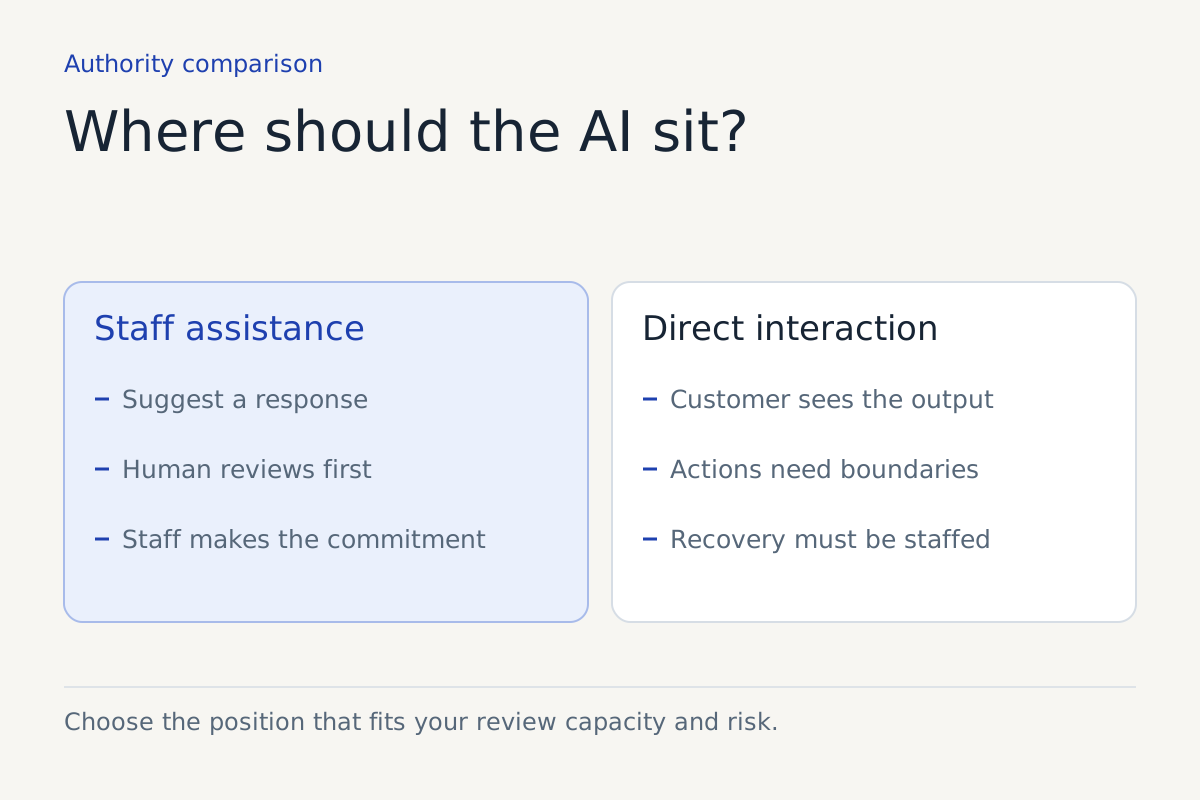
The choice is about where judgment belongs and how much review the team can perform. A staff assistant gives a person a chance to inspect an answer before it reaches the customer. A direct customer system can reduce the need for that immediate review, but it requires stronger boundaries around what may happen without it.
Neither arrangement is automatically safe or economical. A hurried employee can approve an incorrect draft. A tightly scoped customer assistant can handle simple work sensibly. Compare the actual tasks rather than treating either design as a general verdict on AI.
Follow the same request through both designs
Imagine a hypothetical support request about whether an unusual item qualifies for a return. The policy covers standard items but the customer describes a modified product.
In a staff-assistance design, the system might retrieve the relevant policy, identify the missing detail, and draft a clarifying question. A person checks the source and decides whether an exception needs a manager.
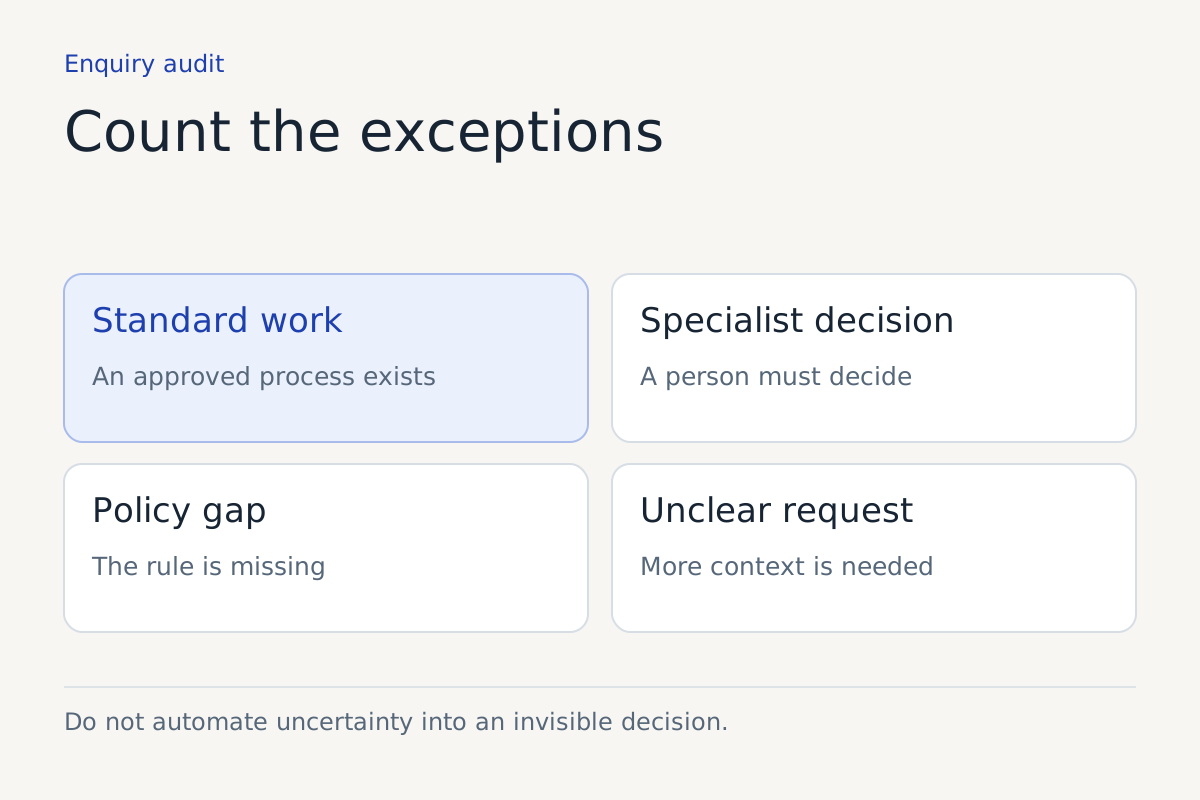
In a direct customer design, the system might ask the approved clarification and route the case when it falls outside the standard policy. It should not invent an exception simply to finish the conversation.
The important difference is the point at which an unchecked interpretation becomes a customer-facing statement or an action.
| Operating choice | Staff assistance | Direct customer automation |
|---|---|---|
| Who sees an uncertain draft first? | A staff member | Potentially the customer |
| Where can correction happen? | Before sending, if review is effective | During the interaction or in later recovery |
| Main staffing requirement | Enough skilled review time | Enough exception and incident coverage |
| Useful first permissions | Read approved information and prepare drafts | Narrow answers and explicitly authorized actions |
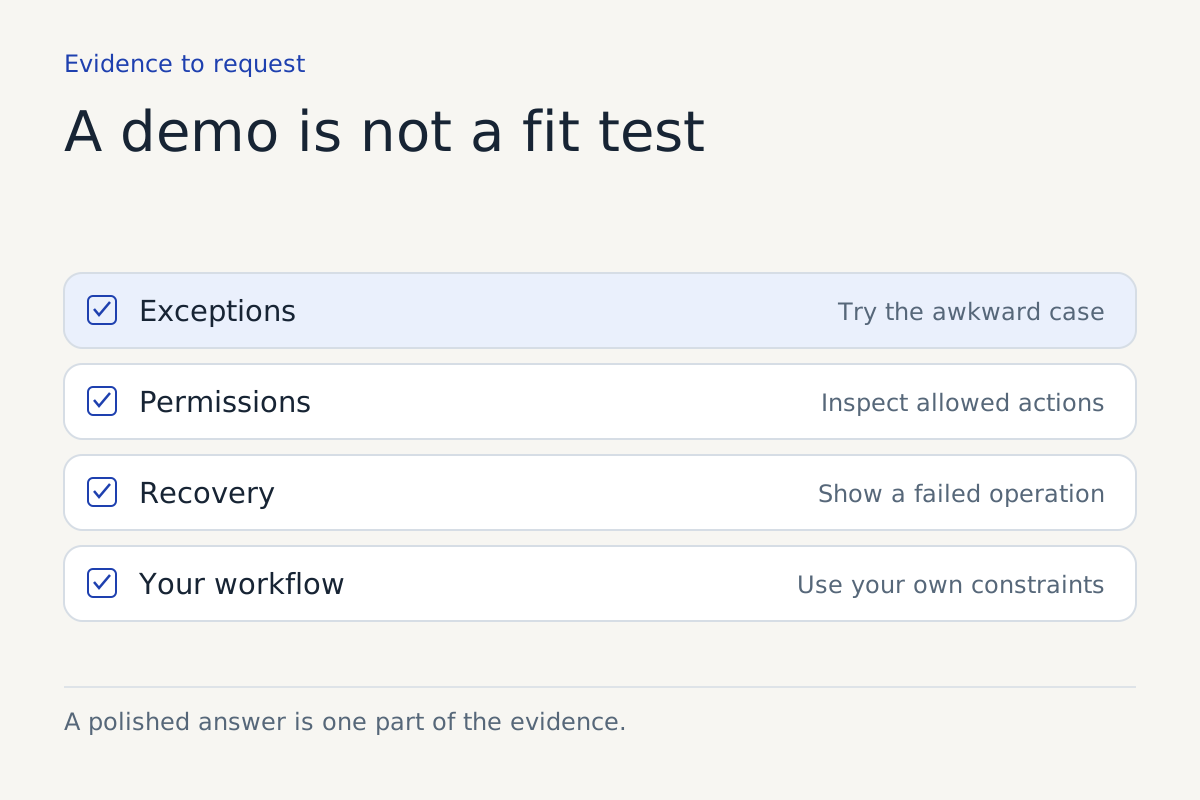
| Evidence to inspect | Draft quality and total handling effort | Customer outcome, action correctness, and recovery |
Review has to be a real task
“Human in the loop” sounds reassuring, but it can describe anything from careful verification to clicking an approval button in a busy queue. Design the review so a person has the evidence and time to judge the output.
Show the relevant source alongside the draft. Mark missing information. Distinguish a retrieved fact from an inference. Give the reviewer an easy way to reject or revise the draft and record why it was wrong.
NIST's generative AI profile discusses over-reliance in human-AI arrangements. Adding a person is therefore a design choice that still needs testing, not a guarantee that mistakes will be caught.
Avoid giving the reviewer so much generated material that checking it takes longer than doing the work. A concise proposed answer with the relevant policy can be more useful than a long explanation that hides the decisive detail.
Choose assistance that exposes the work
Good early candidates make existing work easier to inspect. A request summary can list the customer's stated goal, confirmed details, unresolved questions, and next owner. A knowledge assistant can return the current approved passage rather than a confident answer with no traceable basis.
Keep the first scope narrow enough that reviewers know what correct looks like. If the assistant is asked to combine all company policy, make discretionary decisions, and draft a polished response, it becomes difficult to identify which part failed.
The academic paper Generative AI at work, by Brynjolfsson, Li, and Raymond, studies an assistant used by customer-support workers. Its setting is staff assistance. It should not be presented as proof that an autonomous receptionist will perform similarly in a different business.
You do not need to borrow a study's effect size to justify a local trial. Measure your own draft acceptance, correction effort, missed details, and final outcomes under a clearly defined scope.
Count the effort you have added
Assistance can move work rather than remove it. Staff may spend time opening sources, correcting summaries, or reporting failures. Those activities belong in the evaluation.
Compare total handling time for eligible requests, including review and downstream rework. Also inspect quality. A faster first reply is a weak benefit if another employee has to repair an incorrect expectation later.
Keep rejected drafts. They are useful evidence about the boundary of the task. A pattern of mistakes may point to missing knowledge, ambiguous policy, or a task that requires context the assistant cannot access.
Do not remove review just because the drafts look better
A period of clean drafts may reflect a narrow request mix. It may also reflect staff quietly compensating for weaknesses. Ask reviewers what they changed and why, rather than relying only on approval counts.
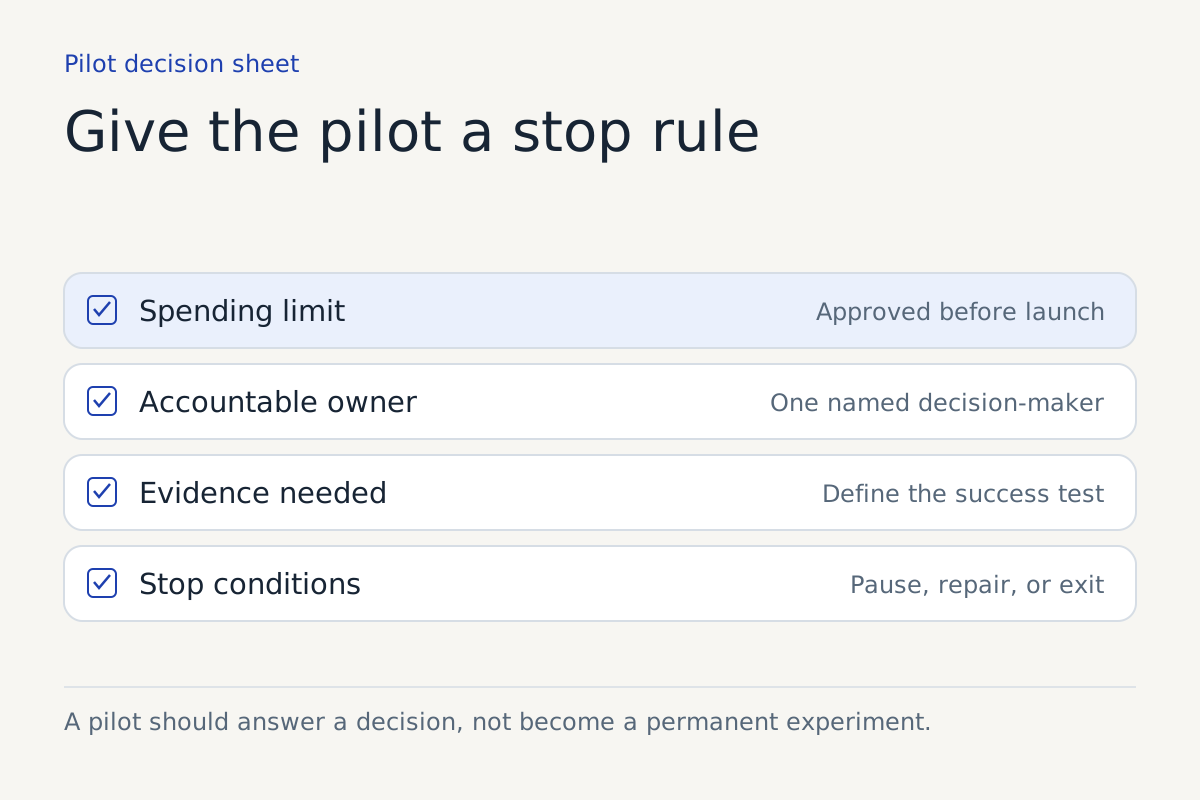
If you decide to automate a portion of the work directly, select the portion whose rules and consequences you understand. Retain the assisted path for ambiguous or consequential cases. The two modes can coexist without forcing every request into one design.
Give staff a way to pause the automated portion and return work to an owned queue. Document how a changed policy reaches both the customer system and the staff assistant, so their answers do not diverge.
A behind-the-scenes project can produce a useful asset beyond the tool itself: a clearer knowledge base, better request records, and visible correction patterns. Those are good foundations for any later decision about what customers should encounter directly.
Sources
- Brynjolfsson, Li, and Raymond: Generative AI at work, revised 2024
- NIST AI 600-1: Generative AI profile
For help defining this workflow, explore our customer messaging work.
Keep reading