Risk and accountability
A compliance badge is not a review of your workflow
Ask for evidence that connects vendor assurances, contracts and configuration to the actual healthcare, legal or enterprise workflow.
Published · Collection dates are retrospective editorial dates.
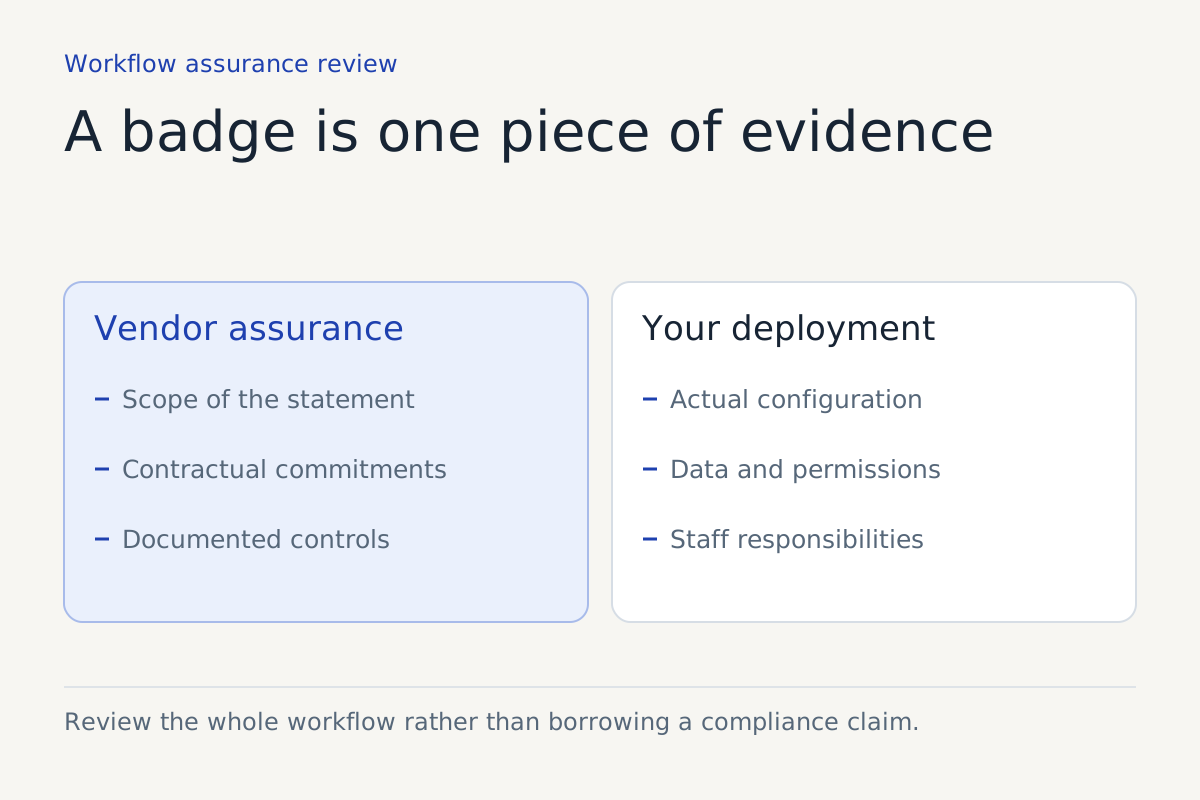
A vendor's security report can be valuable. A contractual commitment can be valuable. Neither tells you, by itself, whether the workflow you are about to enable handles your customers' information and decisions appropriately.
The gap appears in configuration. A product may support restricted access while your account grants broad access. It may offer a suitable agreement while a connected transcription or analytics tool sits outside the reviewed arrangement. It may protect stored data while the assistant makes an unauthorized professional-sounding statement.
Evaluate the vendor evidence and the actual workflow together. The questions below are an original procurement checklist. They do not declare any product, firm or implementation compliant.
Ask what the assurance covers
Obtain the actual document where access permits, not merely the badge image. Identify the service, environment, period, scope and exceptions covered. Ask who issued it and what it does and does not examine.
Then map that scope to your proposed use. Are you buying the reviewed service? Are the features, hosting arrangement and connected providers included? Does the evidence concern security controls, privacy obligations, professional duties or something else?
Avoid treating different assurance types as interchangeable. A security assessment is not a ruling on every legal requirement. A vendor promise is not evidence that the customer configured access correctly. The reviewer should be able to name the conclusion each document supports.
| Evidence layer | What to request | What remains to review |
|---|---|---|
| Vendor assurance | Scope, period and relevant findings | Fit to the service you will use |
| Contract | Data-use and responsibility terms | Actual parties and workflow coverage |
| Configuration | Roles, retention and enabled features | Whether settings match the approved design |
| Operation | Logs, training and incident process | Whether people follow the process |
| Professional review | Applicable duties and approved boundaries | Ongoing supervision and changes |
The categories are a decision aid. The appropriate evidence depends on the organization and the work.
Review the complete healthcare data flow
HHS guidance on cloud computing discusses business associate agreements, risk analysis and allocation of responsibilities for electronic protected health information. The practical buyer task is to establish the relevant parties and data handling before deciding how that guidance applies.
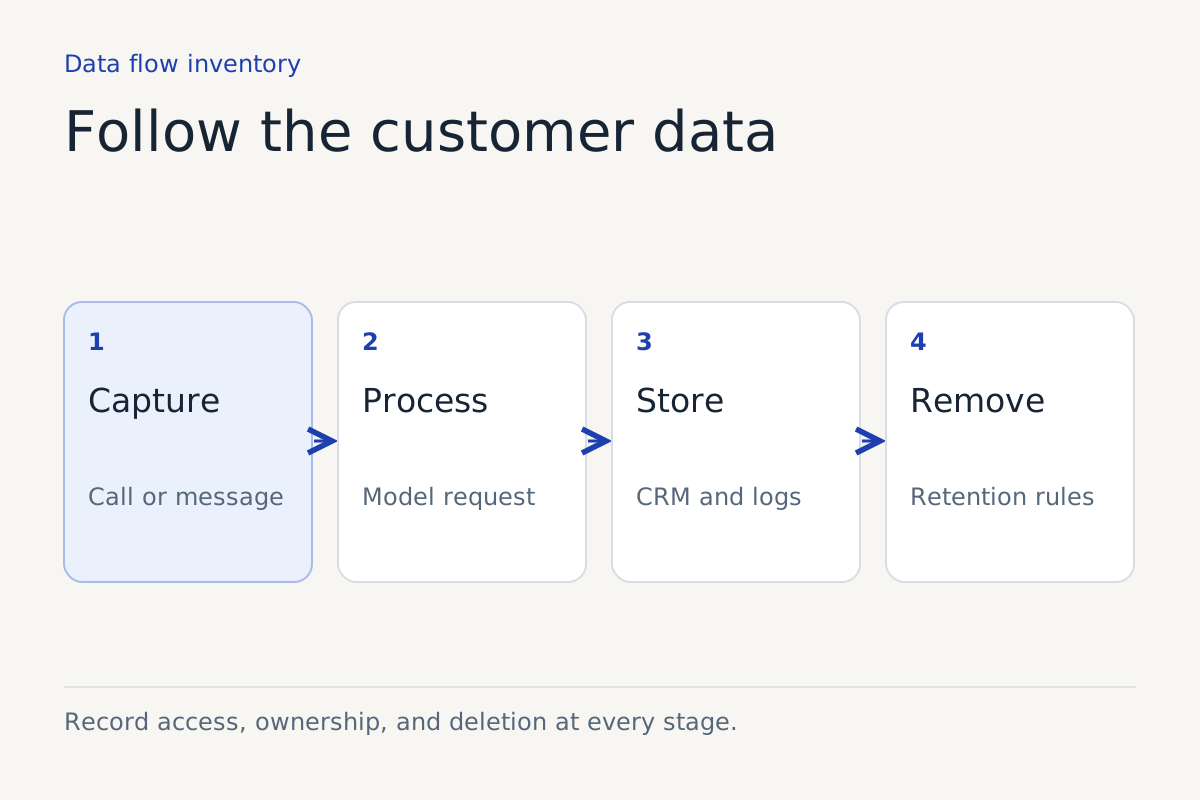
A healthcare procurement review should inspect telephony, transcription, model processing, scheduling, logging and support access where those components are present. Ask the responsible privacy and legal reviewers which agreements, safeguards and procedures are needed for the actual configuration.
Do not assume encryption or an agreement alone answers every question. Review availability, access, retention and incident responsibilities alongside the proposed use. Keep clinical judgment and escalation protocols with the practice's qualified owners.
This is an operational caution. Applicability and obligations need a fact-specific professional determination.
Keep the legal-services example jurisdiction-bound
ABA Formal Opinion 512, issued in 2024, discusses generative AI through the ABA Model Rules, including competence, confidentiality and supervision. It is useful background for a firm's review. It is not a substitute for checking the governing rules and authorities in the relevant jurisdiction.
A law firm's responsible lawyers should examine what prospective clients provide, which services receive it and what the assistant says about representation or legal advice. Ask for an approved intake boundary and a human process for matters outside it.
This article does not conclude that a particular notice, vendor or setting satisfies those duties. The approval must connect the actual use to the applicable professional requirements.
Test the promises against the account
Have the implementation team demonstrate the production configuration or an equivalent review environment. Inspect role access, service accounts, retention settings, integrations and export behavior. Compare them with the approved design and record material differences.
A hypothetical vendor may offer separate retention controls for audio and transcripts. If the buyer reviews only the audio setting, the transcript behavior remains unresolved. Ask specific questions for each record type instead of accepting a general statement that “data is deleted.”
Include support access and emergency procedures. Who can retrieve information during an incident? Who approves that access? What evidence is available afterward? These questions often cross the boundary between vendor controls and customer responsibilities.
Assign the gaps instead of filing the documents
Create a short decision register: open question, evidence needed, responsible reviewer, decision and affected capability. If an issue remains unresolved, specify whether the capability stays disabled, narrows or requires another approved arrangement.
Evidence becomes useful when it changes a configuration, responsibility or decision.
This is an original principle. A folder full of reports is less valuable than a clear record of why the particular workflow is approved and under what conditions.
Make approval expire when the facts change
Define review triggers such as a new provider, new data category, new tool permission or expanded customer-facing authority. Preserve the approved scope so the next reviewer can identify what changed.
Ask the operational owner to check that staff know the current boundaries and escalation route. Procurement review should leave the business with a process people can operate, not only a signed contract.
The strongest outcome is a specific statement: this workflow, using these services and settings, has been reviewed by these accountable people, with these remaining limits. That is a more useful buying decision than a broad compliance label whose meaning nobody can explain.
Keep reading