Industry guides
AI reception for a dental practice: what to automate first
Start with bounded administrative work that respects appointment types, chair capacity and clinician-owned decisions.
Published · Collection dates are retrospective editorial dates.
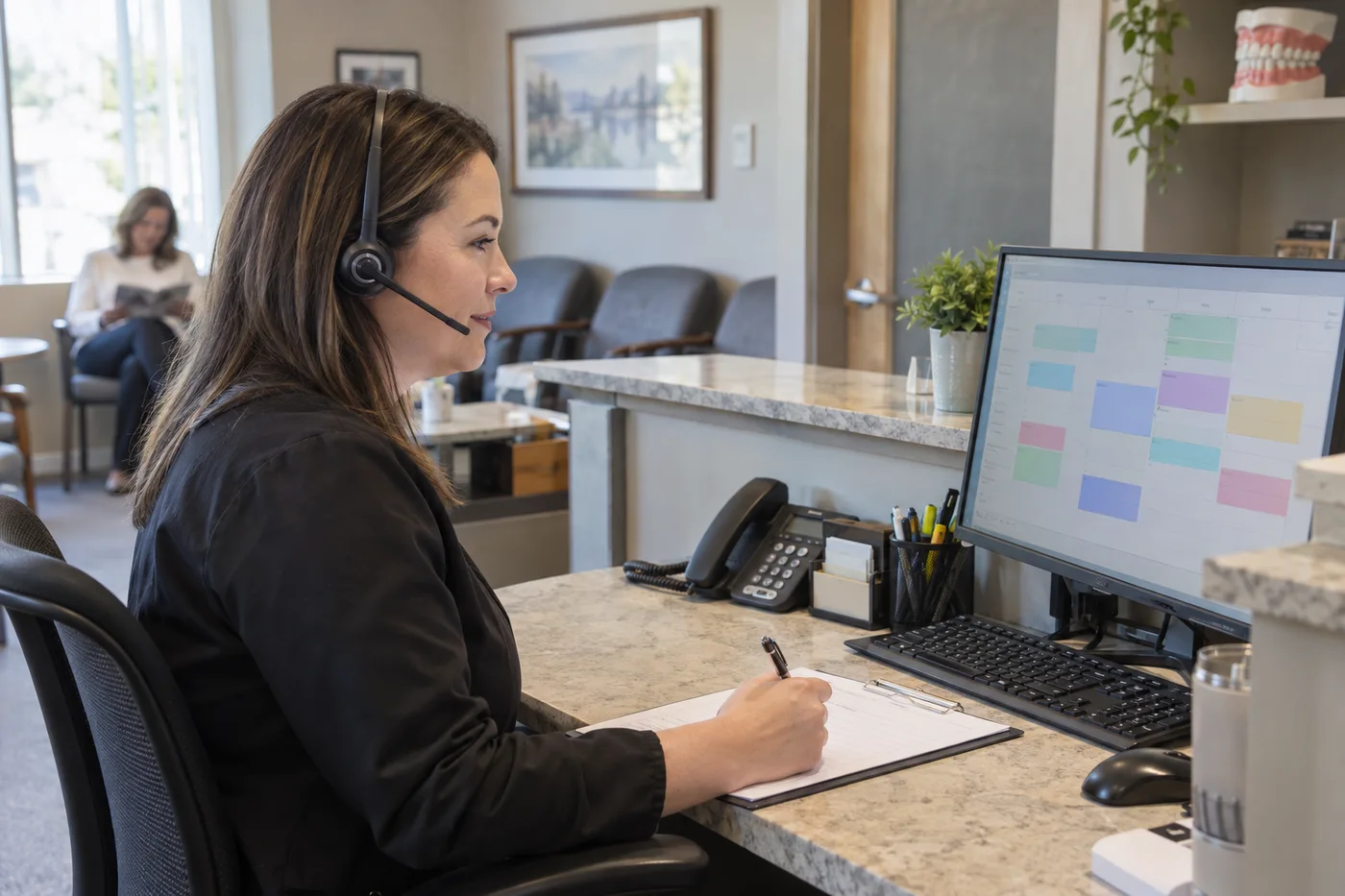
A dental appointment is not simply an empty block on a calendar. The practice may need the right clinician, appointment type, chair, equipment and approved patient pathway. An assistant that sees a free time without those constraints can create a booking the team cannot use.
Start with the administrative work the practice can define clearly. Collecting a request, explaining approved logistics and routing a message may be a better initial scope than granting direct authority over every appointment. The right choice depends on the practice's rules, system capabilities and staffed escalation process.
The workflow below is hypothetical and editorial. It does not supply clinical protocols or assume any particular practice uses these appointment categories.
Choose a narrow first task
A useful first task has an approved answer or a verifiable action. Opening hours, parking instructions and the process for requesting a routine appointment may fit. Diagnosis, treatment suitability and urgency judgments belong to the practice's approved professional process.
Distinguish asking for an appointment from selecting a treatment. A caller's description may be incomplete or ambiguous. The assistant should not turn it into a clinical category the practice has not authorized it to assign.
| Request | Possible administrative scope | Boundary to preserve |
|---|---|---|
| Where is the practice? | Provide approved directions | Keep the location source current |
| I want a routine appointment | Collect approved request details | Apply only practice-supplied booking rules |
| Can you explain this treatment? | Route to approved information or staff | Avoid individualized clinical advice |
| I need to change my visit | Verify identity through the approved process | Do not cancel before the change is safely handled |
| I have a concerning symptom | Use the practice's approved escalation route | Do not invent triage or reassurance |
The table is a scoping aid. The practice's clinicians and administrative owners must approve the actual behavior.
Make appointment rules explicit
List the appointment types the first release may handle. For each, identify duration, eligible provider, required resources, approved prerequisites and the evidence needed to confirm the booking. Where the scheduling product already enforces a rule, verify that the integration uses the same control.
A hypothetical routine visit might require a particular provider and chair configuration. If the assistant can only inspect a general calendar, that may be insufficient. Retain human confirmation rather than treating missing constraints as available capacity.
Google's event-creation guide documents calendar operations. It does not establish the practice's clinical or resource rules. Your booking design needs both the technical operation and the practice-approved definition of a valid appointment.
Keep requests separate from confirmations
Tell callers accurately whether they have submitted a preference or received a verified booking. Record pending work in a queue with an owner. Staff should be able to see what the caller was told and what remains undecided.
Test changed preferences, duplicate patient names, interrupted calls and unavailable scheduling systems. Include an attempt that fails after submission so the team can practice checking whether an appointment exists before trying again.
For rescheduling, test what happens to the existing appointment. The practice should not lose a valid booking merely because the replacement request remains unfinished.
Minimize the first conversation's data
Ask which details are needed for the next administrative step. Avoid collecting an open-ended clinical history merely because conversational software makes it easy. The practice should supply the approved fields and the handling of information a caller volunteers anyway.
Have the responsible privacy and legal reviewers map the services that process the interaction. HHS cloud guidance is relevant background for reviewing electronic protected health information, parties and cloud responsibilities. Applicability and the appropriate arrangement require the actual facts.
Include recordings, transcripts, model requests, logs and staff access in that review where present. Do not assume an administrative label removes the need to examine the data.
Give the front desk a usable handoff
The receiving team needs the caller's goal, approved contact details, requested appointment, current status and any action already attempted. Mark uncertain information as uncertain. Do not bury the request inside a long transcript that staff must interpret from the beginning.
Specify coverage when the front desk is unavailable. The assistant should use the approved expectation and escalation route. It should not promise a callback time the team has not agreed to provide.
AHRQ's follow-up guidance discusses responsibility and patient communication preferences. Use that operational lens when defining who owns the next contact; it does not supply a universal reminder schedule.
Review the work the practice actually receives
During the pilot, inspect valid bookings, pending requests, repeat calls and the staff time spent correcting records. Separate routine administrative requests from cases that needed clinical review. Avoid calling every contained conversation a successful appointment.
Automate the practice's approved administrative process, not a guessed version of dentistry.
This is an original editorial principle. It keeps the project anchored to the owners of the work.
Expand only when the team can explain the failure cases and operate the fallback. The next task might be another approved appointment type, better message routing or no further automation at all. A modest scope that leaves the front desk with clear records is more useful than a broad receptionist that sounds capable while creating appointments staff must rebuild.
Sources
Explore the workflow considerations for ai phone receptionist.
Keep reading