Buying and budgeting
AI receptionist or answering service: which fits your calls?
Compare AI reception, human answering, and combined coverage against the tasks and exceptions your callers bring.
Published · Collection dates are retrospective editorial dates.
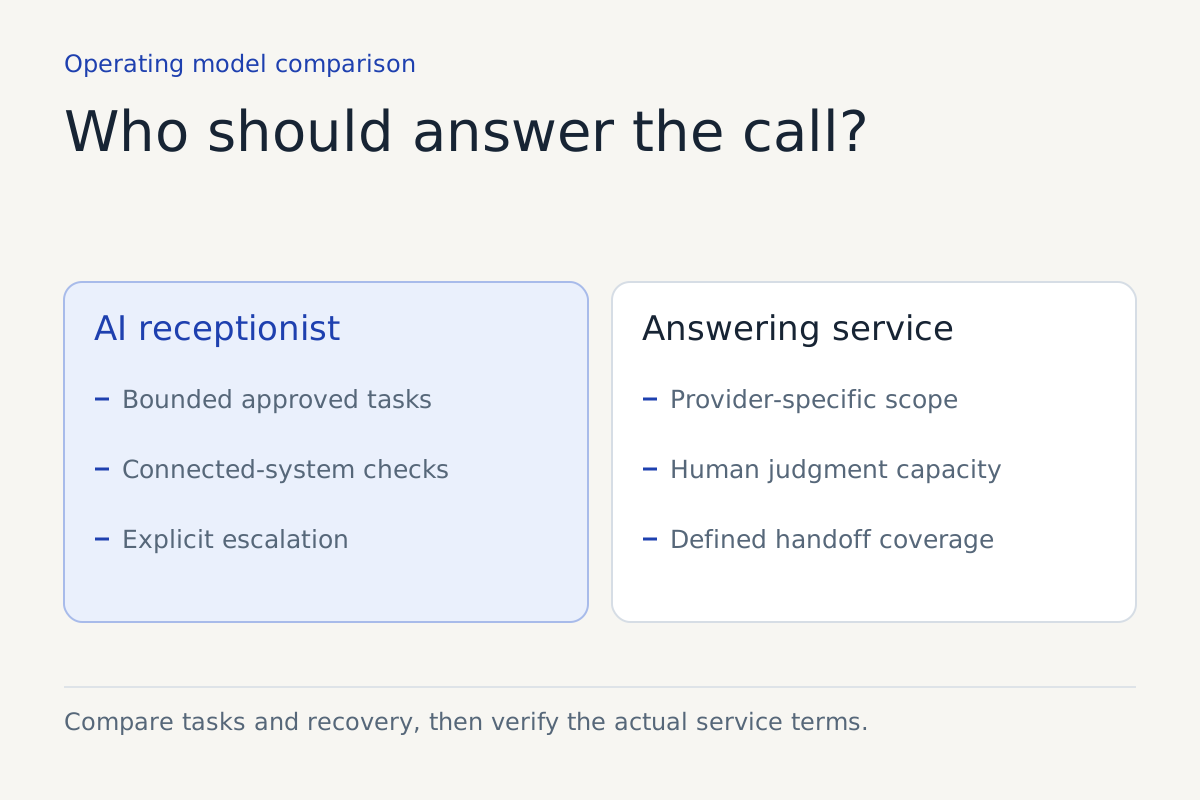
Choosing between an AI receptionist and an answering service is easier when you stop comparing labels. Both labels cover a wide range of arrangements. The useful comparison is what each proposed service may do, what it needs to hand off, and who owns the caller when it reaches a limit.
A human answering service is not automatically authorized to make decisions. An AI receptionist is not automatically limited to taking messages. Actual permissions, training, integrations, and coverage determine the operating model.
Begin with your call mix. Separate approved information, message-taking, scheduling, account-specific work, and matters requiring a qualified professional. Then ask each supplier to demonstrate the same requests under the same rules.
Compare tasks before channels
For a hypothetical appointment business, the call types might include asking about office hours, requesting a routine appointment, changing an existing booking, and discussing a sensitive problem. Those are different tasks even though they arrive on the same phone number.
| Task | What to establish for either option |
|---|---|
| Approved information | Which source is current, and how changes reach the service |
| Message-taking | Required fields, caller confirmation, queue destination, and ownership |
| Scheduling | Appointment rules, live availability, permitted changes, and completion evidence |
| Account questions | Identity checks and limits on disclosure or modification |
| Exceptions | Who may decide, how context transfers, and what happens when they are unavailable |
| Professional matters | The approved route to an appropriate person, without invented advice |
Avoid crediting a supplier with a capability based only on the category it belongs to. Ask the answering service how its staff handle your calendar. Ask the AI supplier how it recognizes an excluded request. Ask both what they do when the policy is missing.
Authority matters more than apparent empathy
A caller may want someone to understand their situation. They may also need a decision the first-line service cannot make. A sympathetic response is valuable, but it should not create the impression that an exception has been approved.
Specify the commitments the service may make. Can it confirm a booking? Quote a fixed price? Promise a callback window? Amend an account? Each permission needs rules and a recovery process.
In legal and medical settings, keep professional judgments with the appropriate qualified people under the organization's approved process. This is an operating boundary, not a claim that one general-purpose phone service meets a particular professional or legal requirement.
NIST's AI Risk Management Framework is a voluntary reference for evaluating AI systems. It does not certify that an AI receptionist is appropriate for your calls, and it does not replace reviewing the actual workflow.
Test language and accessibility with real requirements
Do not accept “multilingual” as a complete specification. List the languages your callers need, the tasks they must complete, and how language mismatches reach a person. Ask whether records and handoff notes preserve the information accurately.
A supplier may perform well on a prepared greeting and struggle with a detailed correction. Test names, addresses, interruptions, and mixed-language requests that reflect your audience. Use safe, fictional data during evaluation.
Also provide an alternative path for callers who cannot use the chosen interaction. The exact requirements depend on your customers and service obligations. The buying question is whether the proposed arrangement gives them a workable route, not whether a feature appears in a brochure.
Inspect the handoff while the destination is busy
Both humans and AI can take a message and leave it in an unowned queue. Both can attempt a transfer that nobody answers. The service model only works if someone owns what happens next.
Ask each supplier to demonstrate an unavailable recipient. What does the caller hear? Does the call return to the original service? Who receives the callback request? How does your team acknowledge that it has accepted the work?
A recorded message is not the same as a completed handoff. A transcript is not the same as a usable summary. Review the actual artifact your staff will receive and decide whether it is enough to continue without making the customer start again.
Consider a combined model without assuming it solves everything
A combined arrangement might use a narrow automated path for approved information and request collection, with people handling exceptions. That can make sense when the boundary is recognizable and the handoff is dependable.
It can also add failure points. The caller may repeat information, the services may use different policy versions, or each supplier may assume the other owns a failed transfer. Name the owner of the whole journey, including the join between services.
Compare total costs under the same call mix. Include transfer charges, internal follow-up, review, and maintenance. Cheap routine handling can be offset by expensive exception work. The reverse is possible when a higher-priced service prevents substantial cleanup. Use your own records rather than a universal savings claim.
Make the final decision at the task level. You may choose human coverage for one type of call, AI assistance for another, and a simple message route for the rest. That is a coherent operating model when the customer path is clear and the responsibilities are explicit.
Sources
For help defining this workflow, explore our AI phone receptionist work.
Keep reading