Deciding where AI belongs
Sometimes a better form is enough
Compare forms, fixed rules, and conversational AI before adding complexity to customer intake.
Published · Collection dates are retrospective editorial dates.
A customer asks for an appointment. You need their name, contact details, location, service type, and preferred time. The request is important. That does not automatically make it a good reason to introduce conversational AI.
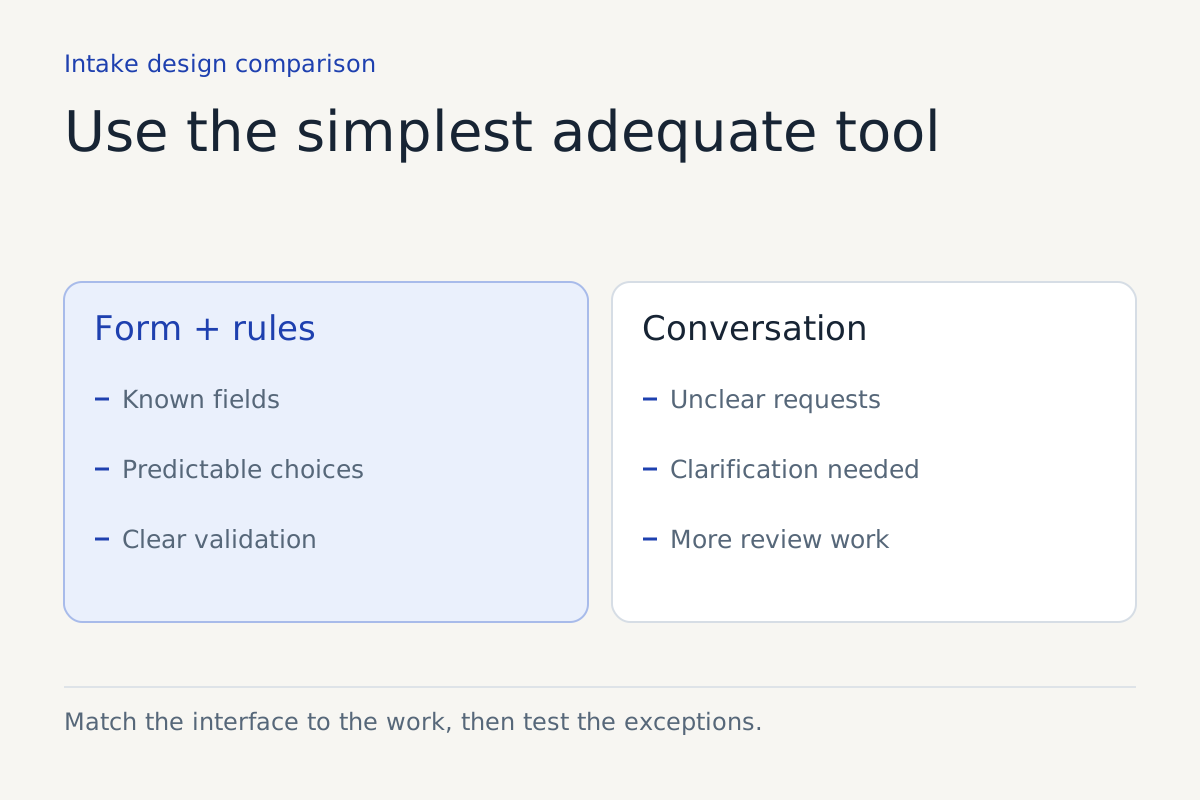
Sometimes the best intervention is a form that asks the right questions, explains what happens next, and sends a complete request to the right person. Sometimes a form creates friction because the customer does not know which service they need. The choice depends on the uncertainty in the work, not on how modern the interface looks.
Consider a hypothetical equipment-servicing company. Its website has a general contact box. Staff routinely reply asking which machine needs attention and where it is located. An AI assistant could ask those questions. So could a better form. Start by comparing both against the same outcome: a usable service request with a clear next step.
Three ways to collect the same request
| Approach | Useful when | Work you still own |
|---|---|---|
| Structured form | Customers can identify the needed options | Field design, accessibility, routing, confirmation, and exceptions |
| Form with fixed rules | The next question follows an explicit condition | Maintaining branches and testing unusual combinations |
| Conversational AI | Customers describe needs in varied language | Knowledge quality, interpretation checks, permissions, monitoring, and handoff |
None of these approaches excuses unclear policy. If your company does not know which locations it serves, a more fluent interface will not establish the answer.
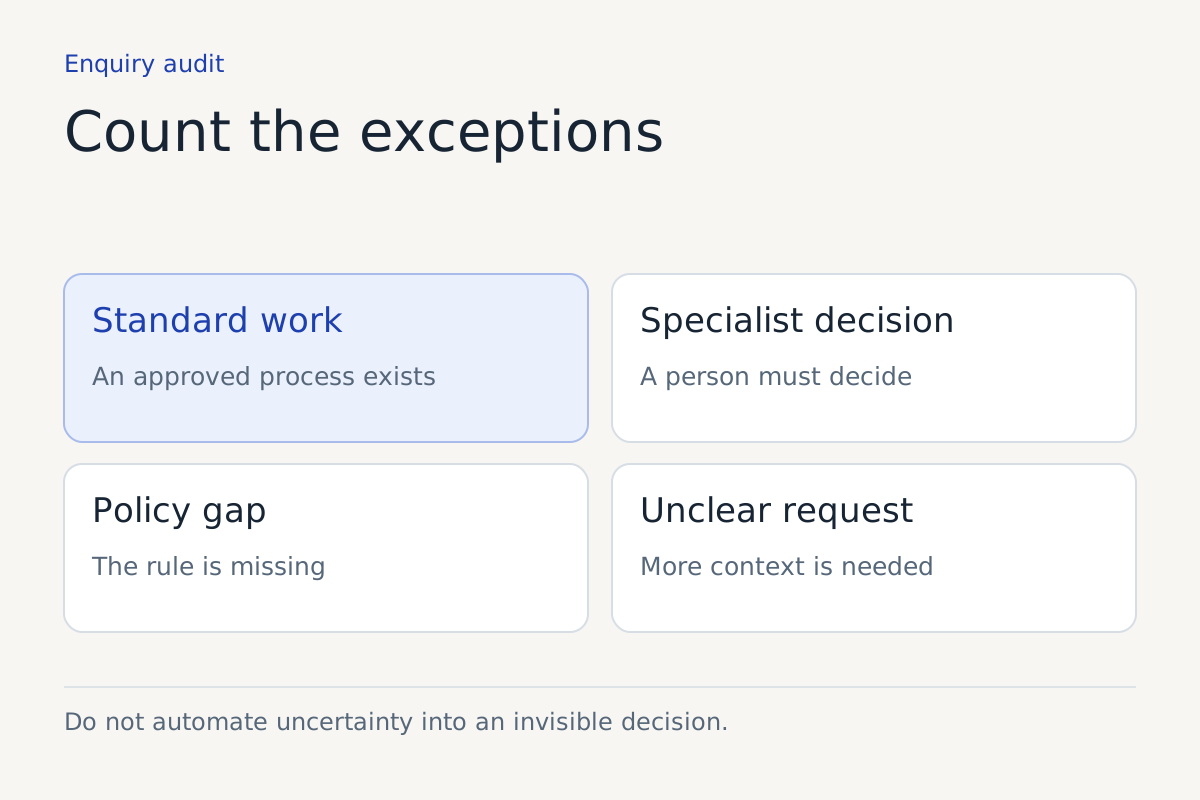
A form also needs a route for people who cannot use it or do not fit the categories. The existence of exceptions is not proof that every request should become a conversation. You can offer a well-designed standard route and a separate assisted route.
First, repair the ordinary intake path
Look for questions the business asks later. If a field is necessary for most requests and reasonable for a customer to provide, consider collecting it up front. Explain why you need it. Make genuinely optional fields optional.
Replace internal terminology with language customers recognize. A customer should not have to understand your department structure to find the right help. Nielsen Norman Group's plain-language guidance draws on usability work with expert readers and argues for clear, familiar wording. That principle is useful for intake labels as well as long articles.
Test the form with a person who does not already know your process. Watch where they hesitate. Do they know whether “installation” includes replacement? Can they enter an international phone number? Can they explain a request that crosses categories? Does the page say whether submission confirms an appointment?
Fix those points before comparing AI. Otherwise you risk measuring a polished conversation against a neglected form and attributing the whole difference to the technology.
Use fixed rules when the decision is fixed
If a request is outside your service area, route it to a defined response. If the customer chooses a particular service type, collect the required additional field. These are explicit branches. A model does not need to invent or interpret the business rule.
A deterministic rule is especially useful when consistency matters more than conversational flexibility. The rule can be inspected directly. Staff can see why a request moved to a queue. A changed policy can be implemented in one place and tested against named examples.
The complication comes when the categories themselves are uncertain. A customer may describe symptoms rather than select a service. For nonclinical administrative work, an assistant may help clarify the request, provided it does not turn that clarification into an unauthorized diagnosis, quote, or commitment.
Add conversation where it earns its place
A useful conversational layer might turn a paragraph into a proposed category and ask the customer to confirm it. It might explain two approved options in plain language. It might let someone provide details in the order they remember them.
Keep the structured record underneath. The customer may speak naturally, but your team still needs reliable fields. Distinguish what the customer supplied, what the system inferred, and what the customer confirmed. An inferred service type should not silently become an approved booking instruction.
A good conversation should reduce effort without hiding the information your operation needs.
Avoid making customers answer one message at a time when a compact form would let them finish faster. Conversation is an interface choice, not an obligation to stretch a task across a series of chat bubbles.
Do not confuse collection with completion
Suppose any of the three approaches connects to a calendar. Collecting a preferred time, querying availability, and creating a confirmed event are separate actions. Google Calendar's event-creation guide documents the fields and permissions needed to create an event. Your business still has to decide which calendar, duration, staff member, and appointment type are appropriate.
An interface can look successful while the underlying request fails. The confirmation screen or message must reflect the actual state. “We received your request” is appropriate when a person still needs to approve it. “Your appointment is booked” requires evidence that the booking exists and meets the agreed rules.
Decide using the work after submission
Run a small supervised comparison with a corrected form before committing to a conversational system. Inspect whether the requests are complete, correctly routed, and understandable to staff. Record the cases that still need clarification and why.
If customers can use the categories and staff receive usable records, the form may be enough. If the remaining difficulty is language variation, a bounded conversational assistant deserves a trial. If staff must make a judgment that depends on unavailable information, keep that judgment with them.
You can make the intake path better without making it more elaborate. The strongest choice is the one your customers can finish and your staff can trust.
Sources
For help defining this workflow, explore our customer intake work.
Keep reading