Customer experience
A contained conversation can still be an unresolved problem
Measure containment, task completion, repeat contact, and customer-confirmed resolution as separate outcomes.
Published · Collection dates are retrospective editorial dates.
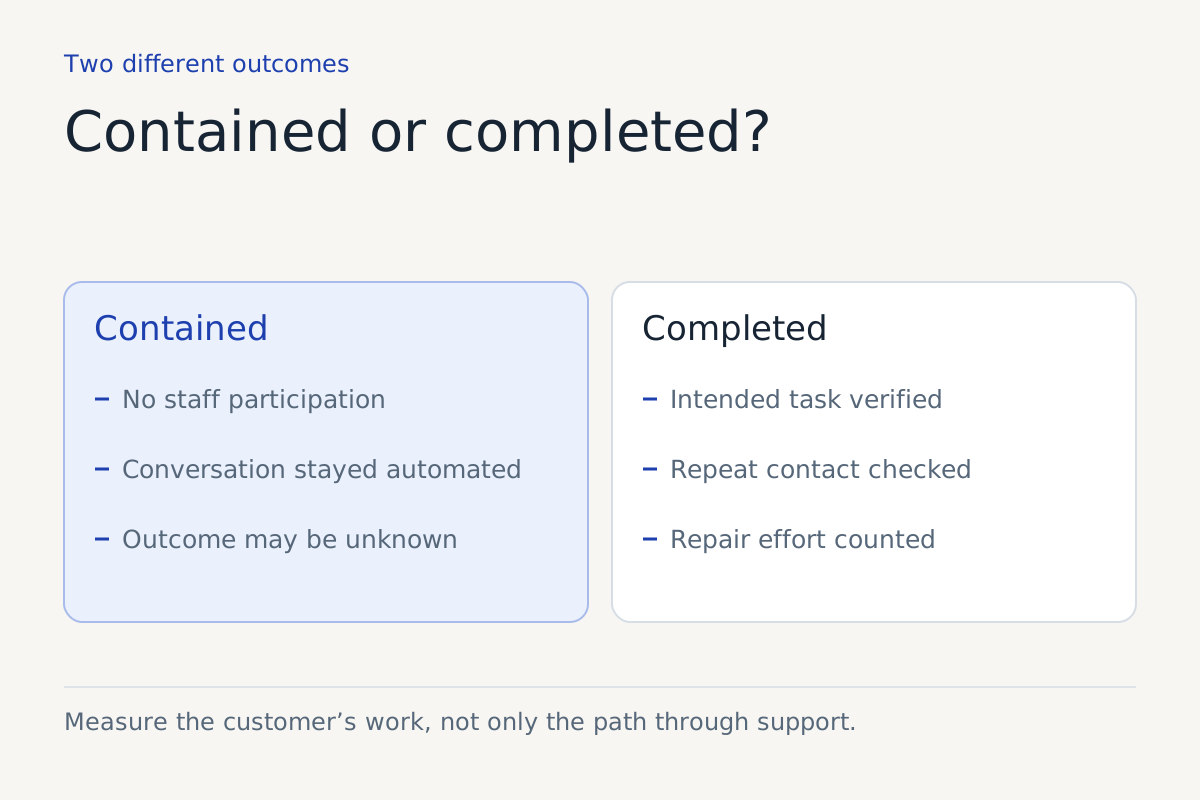
A customer asks to move an appointment. The assistant explains the rescheduling policy, offers a link, and closes the conversation without involving staff. The support dashboard counts a contained interaction. The customer never moves the appointment because the link fails.
That hypothetical case is easy to miss when containment becomes the main measure of success. Containment describes how a conversation traveled through the support system. It does not by itself establish whether the customer's task was completed.
Use containment as one operational measure, then add the evidence that makes it meaningful. The definitions below are original suggestions for a team to adopt or adapt. They are not presented as universal industry standards.
Define the unit before the rate
Decide what counts as a conversation, a contact, and an issue. One issue might produce a chat, an email, and a phone call. If each contact is measured separately, the system can appear successful on the first contact while the total work increases.
Keep a stable issue reference where the workflow supports it. Define how repeat contacts are linked, which cases remain uncertain, and how long the outcome window stays open. Choose the window for the task rather than copying an arbitrary reporting period.
A booking change can often be verified in the scheduling record. A complex service complaint may remain open until staff complete an agreed action. Those tasks should not be forced into the same completion evidence simply to simplify a dashboard.
| Proposed measure | Suggested evidence | Important limitation |
|---|---|---|
| Containment | No staff participation during the defined interaction | Could include abandonment or an incorrect answer |
| Task completion | Authoritative record shows the requested action | Does not necessarily mean the customer is satisfied |
| Repeat contact | Linked contact about the same unresolved issue | Linking can be incomplete |
| Handoff quality | Receiving owner has useful context and accepts work | Transfer alone does not finish the task |
| Customer-confirmed resolution | Customer confirms the issue is resolved | Nonresponse is not positive confirmation |
Publish the definitions alongside the dashboard. A rate without a denominator or outcome window is difficult to challenge and easy to misuse.
Give abandonment its own state
A customer who stops replying may have received the answer they needed. They may also be confused, frustrated, interrupted, or unable to use the proposed next step. The transcript alone may not settle which explanation applies.
Keep an unknown outcome state. Where appropriate, verify the action in the connected system or use the business's approved follow-up process. Do not label silence as resolution merely because the helpdesk automatically closes the conversation.
This distinction is especially useful when testing a new channel. A shorter conversation can reflect better design, but it can also reflect a customer giving up sooner. Read a sample of uncertain cases before assigning a favorable interpretation.
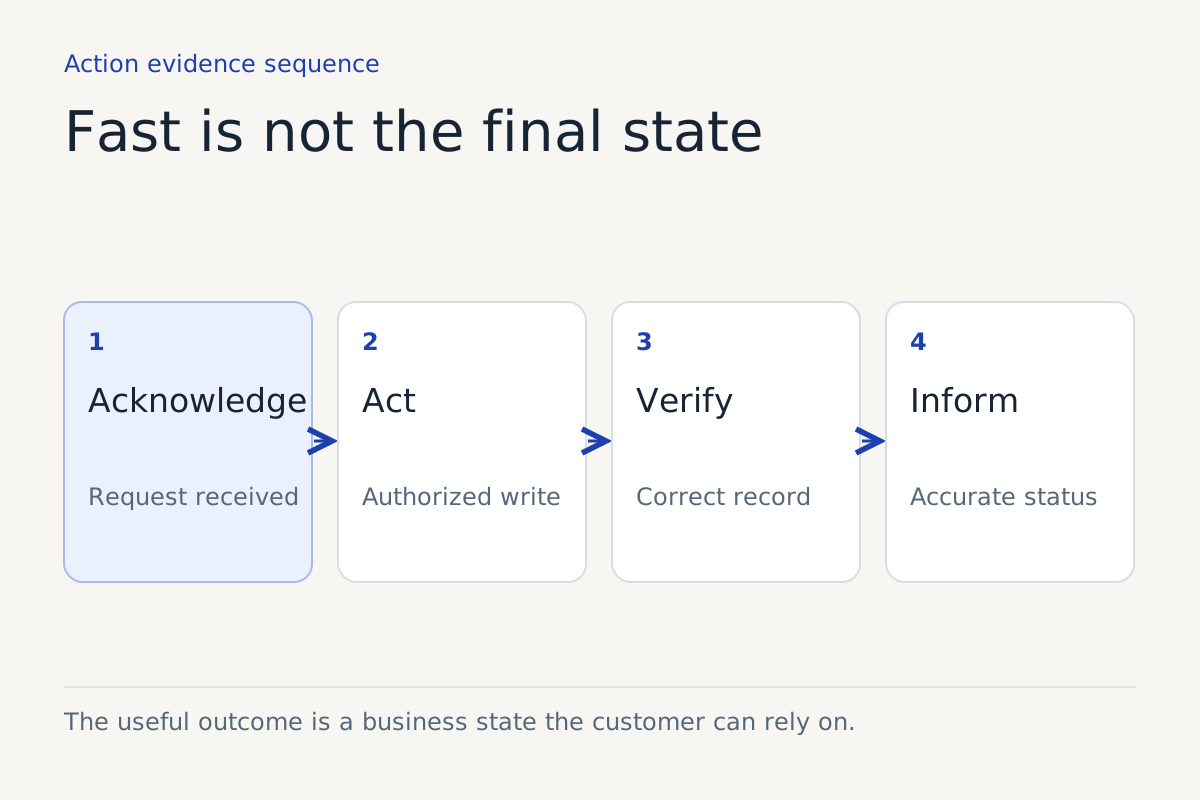
Automation is successful when the supported work gets done with acceptable risk and effort.
That is an original measurement principle. It leaves room for containment to improve while also requiring evidence about the work itself.
Inspect the easy success and the hard failure
Review ordinary completed cases to confirm that the system is doing what the business thinks it does. Then deliberately sample reopenings, repeated contacts, unaccepted handoffs, and cases with uncertain tool results.
In a hypothetical pilot, the assistant may successfully answer approved policy questions but struggle when a customer asks for an exception. A single blended containment figure can hide that difference. Separate the results by task and authority so the team can narrow the problematic branch without discarding useful work.
Do not rely only on random samples if rare failures carry substantial consequences. Include targeted reviews of financial actions, private-record access, and promises requiring approval. The sampling plan should reflect consequence as well as volume.
Count the staff work outside the conversation
An automated contact can generate review work, data correction, callbacks, or duplicate cleanup. If that work is invisible, containment can appear to reduce workload while moving it into another queue.
Give staff a simple way to record repairs linked to the original issue. Avoid a burdensome tracking process that costs more than it reveals. A short defect category, time estimate, and affected action reference may be enough for a pilot, provided the definitions are consistent.
Review the business outcome and the repair effort together. A completed booking that required manual reconstruction may still be useful, but it represents a different operating result from a booking completed correctly without intervention.
Make escalation a legitimate outcome
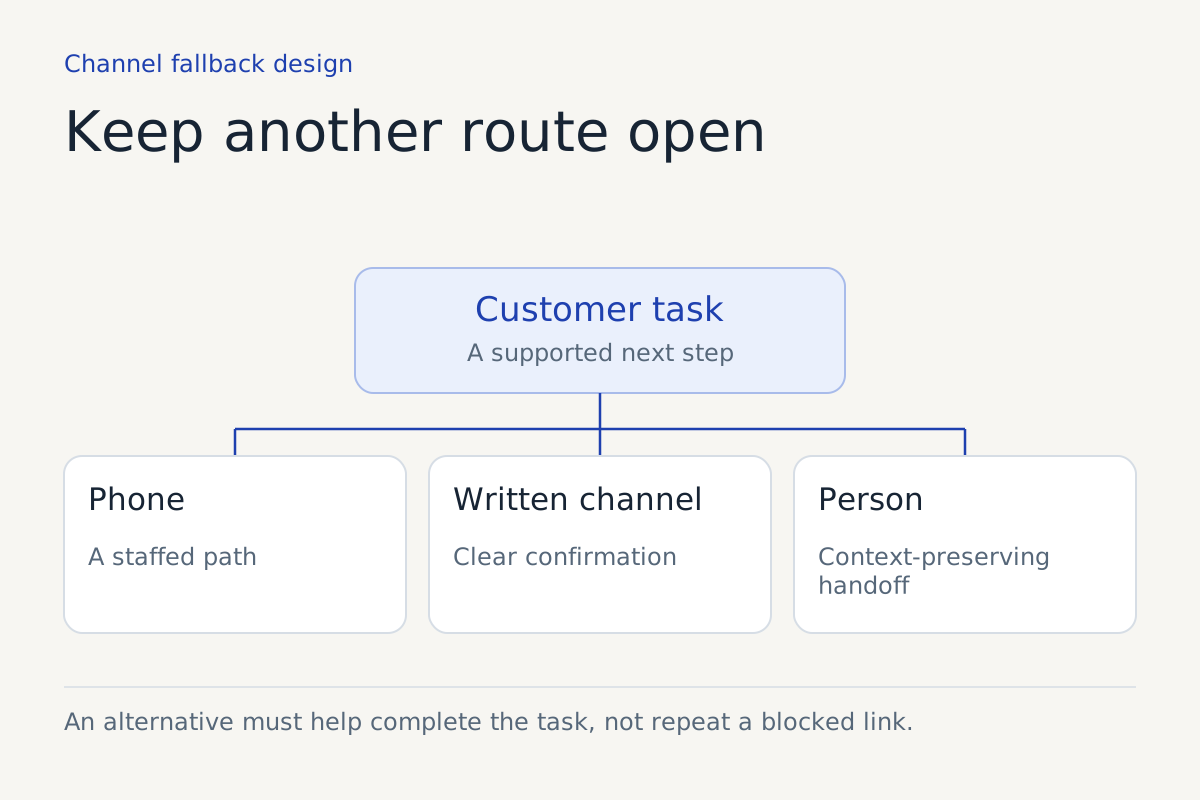
Some tasks should reach a person. If the assistant recognizes a boundary, preserves the context, and transfers the work to an available owner, the interaction may be successful even though containment falls.
Measure whether the receiving team accepted the handoff and could proceed without repeating intake. Also check whether the assistant made unauthorized commitments before transferring. A neatly packaged escalation does not erase a promise the customer already heard.
This keeps teams from tuning the system to avoid human involvement at any cost. The objective is appropriate completion, including the deliberate use of staff judgment where needed.
Keep quality independent of speed
First Round's public CX interview distinguishes operational efficiency and support quality. That distinction is useful without importing the featured company's metrics as benchmarks for your business.
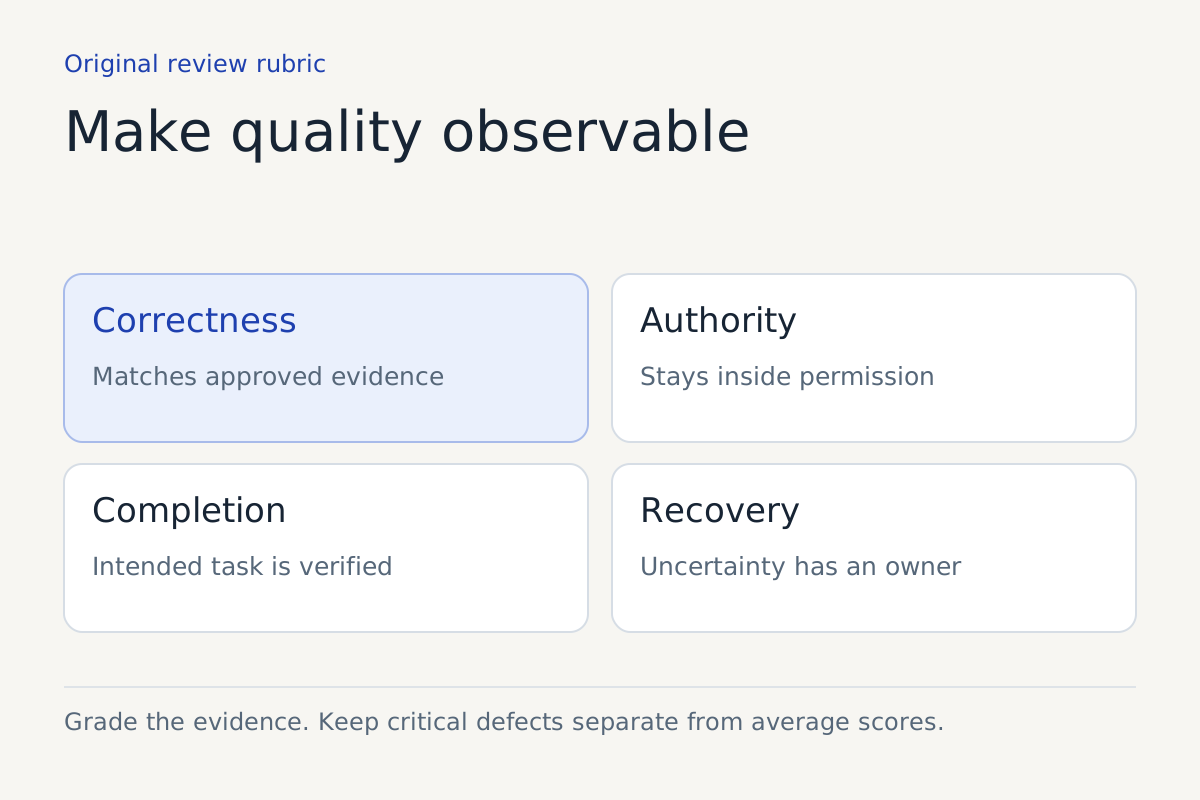
In your own review, place response timing beside correctness, completion, and recovery. An immediate wrong answer should not outrank a slightly slower accurate handoff. A correct factual answer should not count as a completed financial action.
At the pilot decision, show the favorable outcomes, the failures, and the unresolved cases. State what additional evidence would change the decision. A dashboard that admits uncertainty is more useful than a single impressive rate whose definition hides the work customers still need done.
Keep reading