Customer experience
Design for the customer who cannot use your preferred channel
Review the alternate paths, language, pacing, and staff handoffs customers need when your default support channel does not work for them.
Published · Collection dates are retrospective editorial dates.
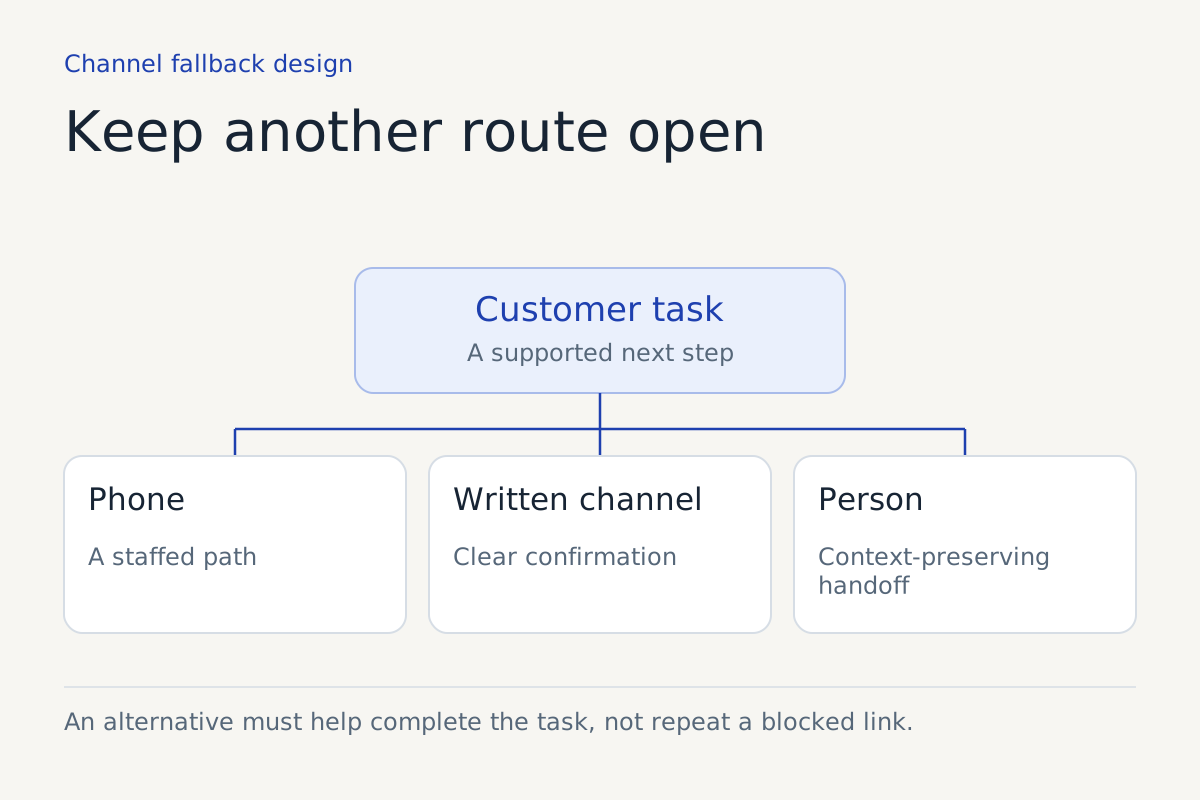
A booking link may be the fastest path for the business and an unusable path for the customer. A caller may have limited connectivity, find the interface difficult, share a device, or simply need to clarify something before proceeding.
A support design fails when it treats inability to use the preferred channel as refusal to cooperate. If the assistant keeps sending the same link, the customer has no practical next step even though the system appears responsive.
Design an alternative route before launch. This article is a service-design checklist, not a legal accessibility assessment. The operational goal is to make the supported task possible without requiring every customer to interact in the same way.
Start with the blocked task
Choose a real task: reschedule an appointment, obtain a policy answer, report an issue, or request a callback. Follow the default path and write down what the customer must have or do to complete it.
That might include opening a web page, receiving a text, hearing a spoken reference, entering a long identifier, or staying on the line while several details are read back. Each requirement can become a barrier in some circumstances.
Do not assume you know why a person needs another route. Ask a practical question such as whether they would prefer help by phone or an approved alternative. Collect the minimum information necessary to provide that help. Customers should not need to explain personal circumstances simply to escape a dead end.
AHRQ's follow-up guidance recommends asking patients how they prefer to be contacted and avoiding exclusive reliance on electronic communication. That is healthcare guidance, but it provides a useful prompt for service design elsewhere: availability of a device does not establish preference or reliable access.
Check the actual alternatives
- A customer can request a person without repeatedly failing the automated path.
- The alternative channel can complete the task or reach someone who can.
- The receiving team gets the request and context already collected.
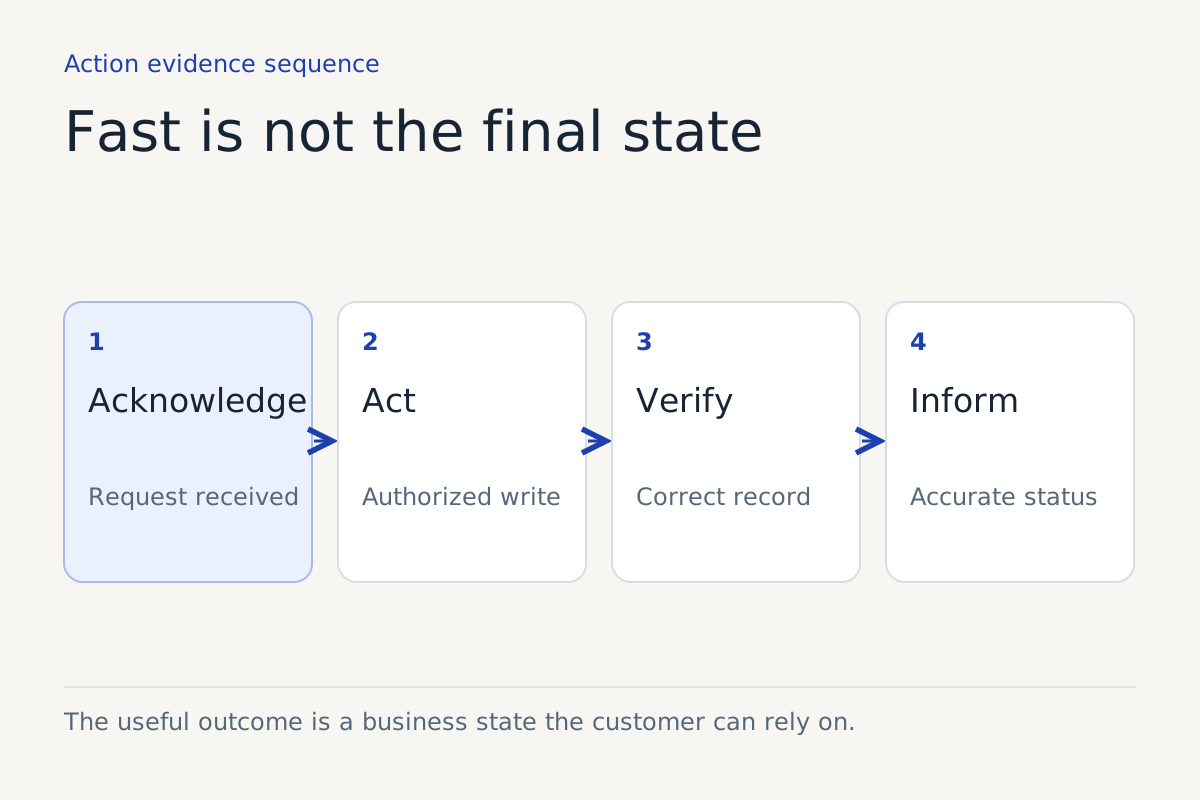
- The customer knows whether an action is pending or completed.
- A failed text or email delivery leaves a visible work item.
- The alternative is staffed during the hours the business promises it.
A list of contact methods on a website does not establish these conditions. Test each route as a journey. If the phone team sends the customer back to the form they could not use, the alternative exists only on paper.
Use language that supports a decision
Plain language helps customers understand what they need to do. NN/g's discussion of plain language for expert readers also challenges the idea that complex wording is necessary for sophisticated audiences.
Apply that principle to status messages. Replace internal queue names with the relevant next step. Explain what “pending” means in the customer's situation. If approval is required, say who reviews the request and what the customer can expect while it waits.
Avoid compressing multiple conditions into one long spoken response. Give the person time to answer and correct details. When spelling or numbers matter, confirm them in manageable parts using the business's approved process.
For a hypothetical service appointment, “Your request is recorded; dispatch still needs to confirm the arrival window” is easier to act on than an internal status code. The wording should preserve the actual business state, not simplify it into an inaccurate assurance.
Let the interaction slow down
An assistant that speaks smoothly may still move too quickly. A caller may need an address repeated, time to find a reference, or a chance to correct a transcription error. Those are ordinary service conditions, not edge cases to be rushed past.
Test interruptions, pauses, corrections, and requests for repetition. The assistant should preserve the task while allowing the person to control the pace. If it restarts intake after every correction, it creates extra cognitive work.
Where the interface supports written confirmation, offer it through an appropriate agreed channel. Do not assume written confirmation is always accessible or private. The customer may prefer a different method, and the business needs rules for what information may be sent where.
Confirm understanding without turning it into a test
Ask a practical confirmation question when the next step matters. Did the person want the callback at the number provided? Does the proposed appointment window work? Do they understand that the request still needs approval?
Avoid asking “Do you understand?” after a long explanation and treating a brief yes as proof that the task is complete. Give the person a simple opportunity to state or choose the next action. If the customer expresses confusion, the system should clarify or involve a person rather than repeat the same wording louder or longer.
A hypothetical rental customer might hear both a hold expiry and a pickup time. Confirm those as separate events. Mixing them together can cause a missed booking even when every sentence was factually correct.
Preserve context during the handoff
A useful transfer says what the customer is trying to accomplish, what has already happened, and what prevented completion. It does not need a speculative label about the customer's abilities or attitude.
“Customer could not open the booking page and wants phone assistance for rescheduling” is actionable. “Difficult customer needs help” is an interpretation that can prejudice the next interaction and gives staff less useful information.
Record the preferred channel and any agreed callback window. If no employee can accept the handoff immediately, keep it pending and tell the customer the actual next step. Do not promise live assistance when the receiving queue is closed.
Judge the route by completion
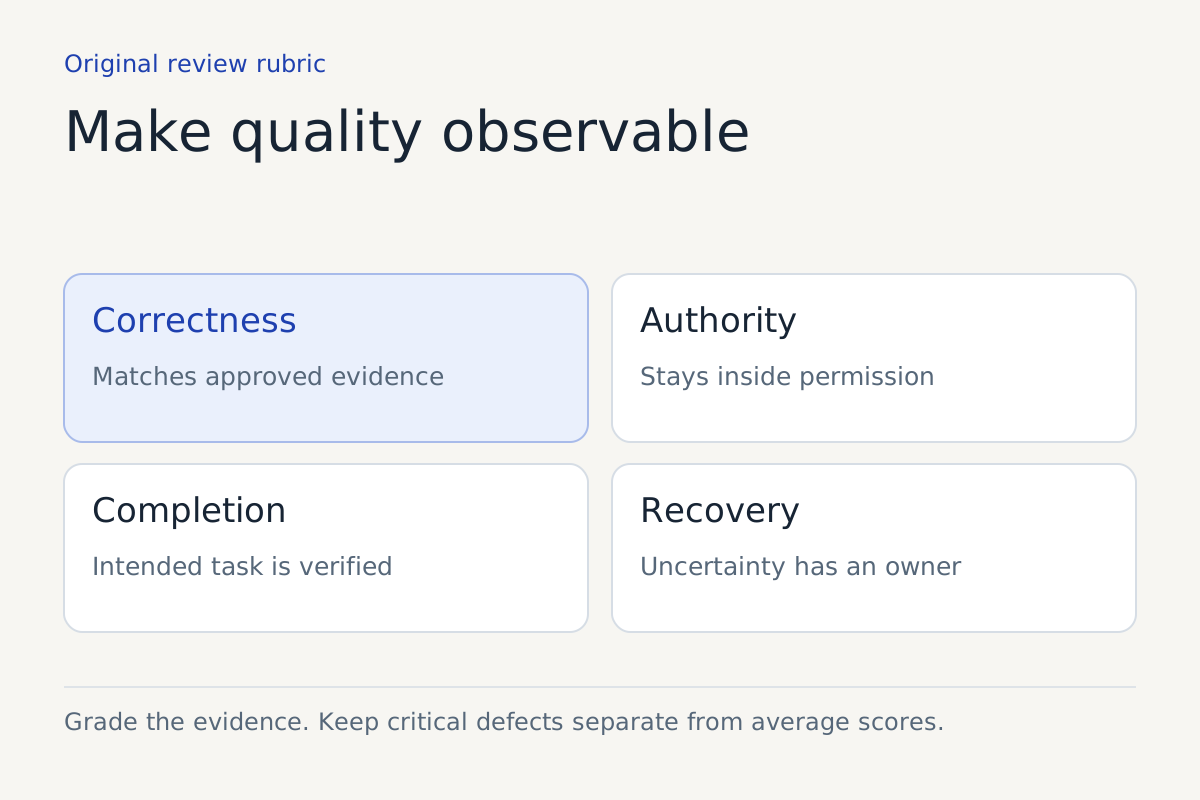
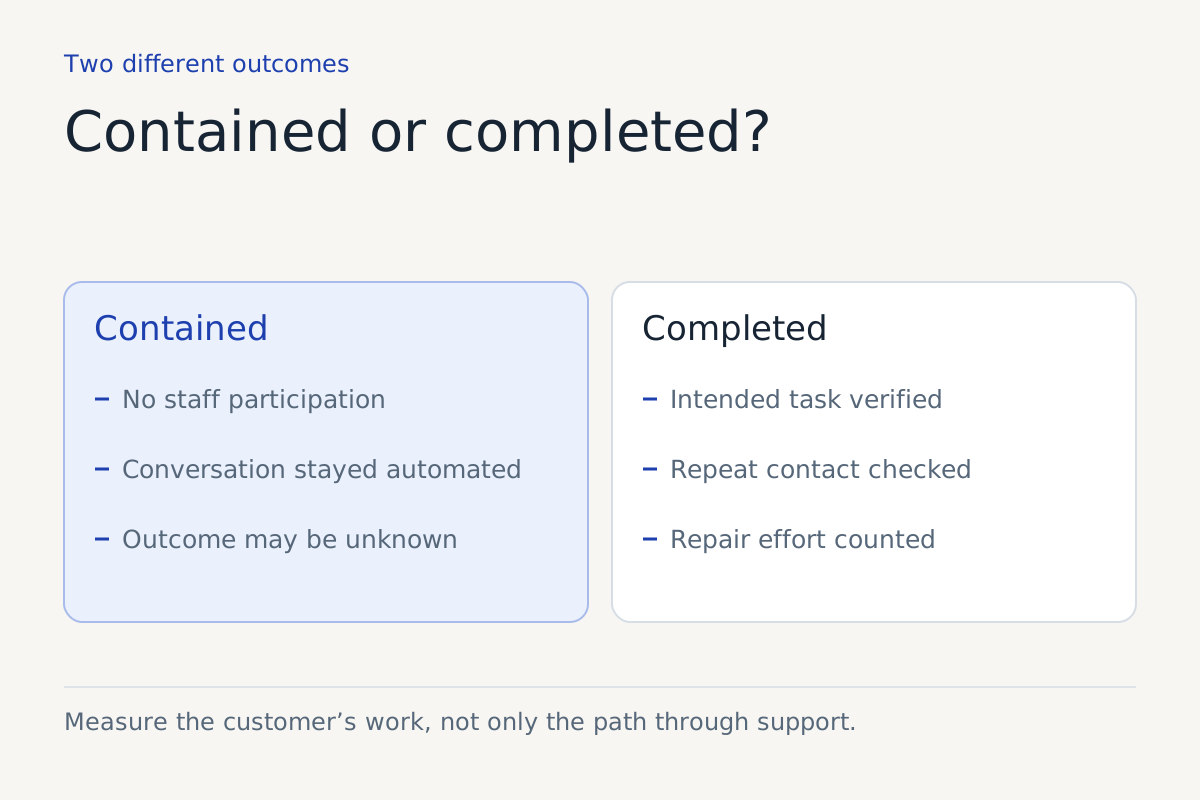
Review cases that leave the default channel. Did the customer reach a responsible person? Was the requested action completed? How much information had to be repeated? Which customers disappeared with an unknown outcome?
Use that evidence to improve the service rather than merely trying to force more traffic back into automation. A dependable alternative can prevent repeated contact and give staff a better starting point when judgment or patient explanation is needed.
Keep reading