Operations
After-hours coverage needs a morning recovery process
Give the morning team a reliable way to reconcile overnight requests, uncertain actions, and customer commitments.
Published · Collection dates are retrospective editorial dates.
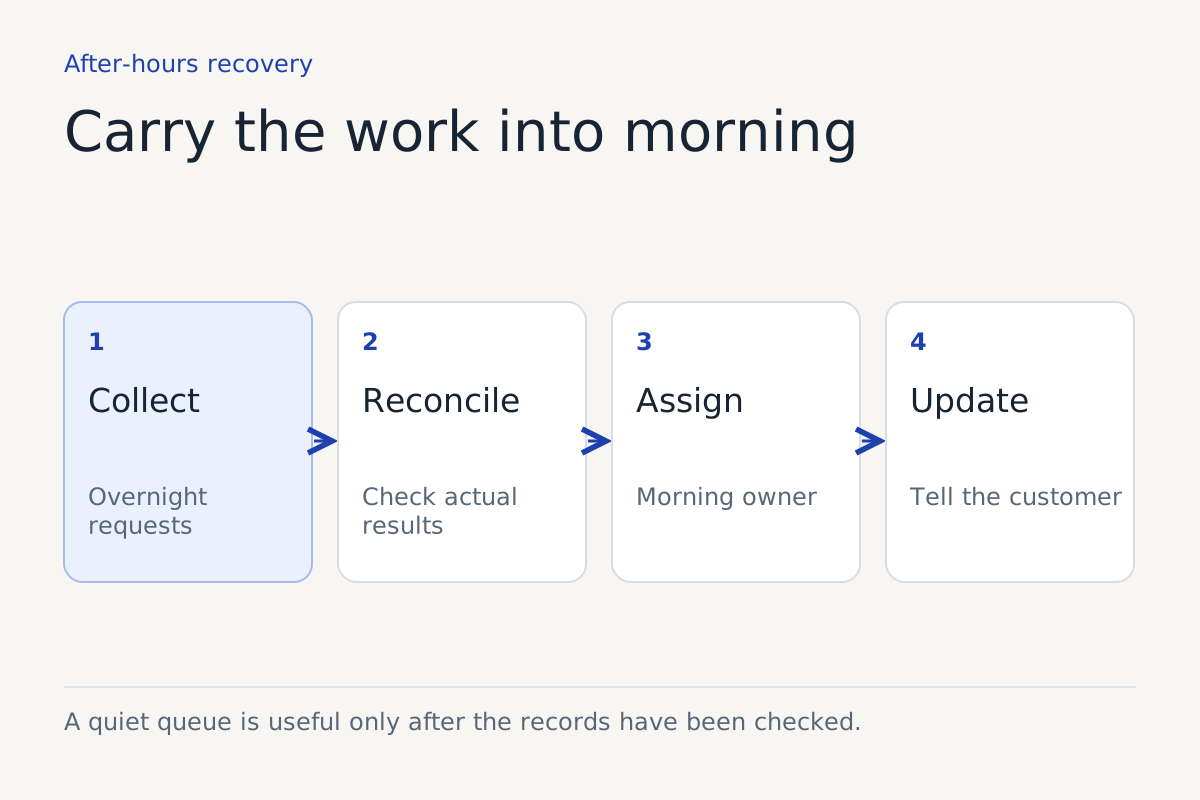
After-hours coverage creates work for the morning shift. Even a capable assistant will collect requests it cannot finish, encounter unavailable systems, and reach people who need an authorized decision. Those cases need a place in the operating day.
If the morning team receives only a transcript digest, staff must reconstruct what happened before they can act. They may miss an unconfirmed booking, call someone who already received help, or make a second commitment that contradicts the overnight one.
Build the morning recovery process alongside the evening intake. The design below is an original checklist for a hypothetical service operation. Adapt it to the business's actual hours, professional boundaries, and staffing arrangements.
Define what survives the shift change
A case remains open when the intended work is incomplete or its result is uncertain. That includes requests awaiting approval, failed transfers, unacknowledged escalations, unsuccessful customer updates, and actions whose outcomes cannot yet be verified.
Do not let the overnight assistant close those cases merely because the conversation ended. The customer may be asleep while the business still owes them a decision. Conversation status and work status should remain separate.
Each open case needs the intended task, a reference to the authoritative record, the current state, and the next responsible role. Include the commitment the customer heard. If no commitment was authorized, make that clear as well.
Use a queue the morning team already owns
A second dashboard can look tidy while remaining invisible to the people doing the work. Put recovery cases in an operational queue staff actually check, or establish a deliberate routine for the new queue with a named owner.
The owner should review the entire overnight period, including cases marked successful. A missing integration can produce a blank queue even though calls occurred. Reconcile counts and known records before assuming that no work remains.
The worksheet is a proposed control, not a requirement from a vendor or regulator. Its purpose is to make the handover explicit enough to inspect.
Reconcile before retrying
An assistant may have submitted a booking or another action but lost the response. Stripe's idempotency article explains the underlying distinction between an operation failing and its response failing. Your own connected systems need documented reconciliation behavior.
The morning employee should inspect the known request identifier or authoritative record before creating another action. If the result remains unknown, keep the case assigned and unresolved. Repeating the operation as a fresh request may compound the uncertainty.
For a hypothetical appointment request, staff would check whether the intended event exists for the correct customer, service, and time. Finding an event with a similar title is not enough. The record must match the intended action and the approved booking rules.
Read the promise column first
The most urgent operational issue may be a commitment the customer thinks has already been made. A transcript can contain “someone will call you at opening” even though no employee accepted that callback.
Make such promises visible in the queue. Staff should decide whether to honor the commitment, correct it promptly through the approved process, or escalate the case. Do not let the assistant's wording silently become company policy.
When reviewing the case, distinguish the customer's request from the assistant's offer and an authorized staff decision. Those can be different statements. A summary that merges them prevents the morning team from understanding what needs repair.
The morning recovery checklist
- Check that the queue covers the complete overnight period.
- Match pending writes against the authoritative systems.
- Identify escalations nobody accepted.
- Find bookings described to customers as pending or confirmed.
- Link repeated contacts about the same issue.
- Assign each open case to a person or staffed role.
- Send accurate updates through approved channels.
- Record completion evidence before closing work.
- Raise recurring integration or policy defects for repair.
Use priorities based on the business's approved processes and the commitments already made. This article does not prescribe a universal urgency classification, especially for clinical, legal, or safety-sensitive contacts.
Avoid the duplicate callback
A customer may call overnight, send an email, and reach an employee just before the morning review. If those contacts remain separate, several people may respond with different answers.
Link the records where the business can do so appropriately. The owner should see the latest verified state and any staff action since the overnight request. Matching needs care when contact details are shared or records are ambiguous; do not merge cases solely because a phone number looks familiar.
If two teams have already acted, resolve the actual business state before sending another confident answer. Identify which booking, dispatch decision, or remedy remains valid. Keep an audit trail so staff can explain the correction.
Close the work, then improve the night
A morning repair should produce two outcomes: the customer's issue reaches the appropriate next state, and the underlying defect becomes visible to the person who can fix it.
Tag the cause simply. Was it missing knowledge, unavailable staff, an unclear policy, a permission problem, or an integration failure? Avoid blaming “AI” as a single category; it does not tell the owner what to change.
The NIST AI risk management framework provides a voluntary context for ongoing review. Here, that review can use ordinary operating evidence: recurring pending cases, failed acknowledgements, and unauthorized promises.
Test the shift change itself
Run a hypothetical night with an ordinary request, a failed booking response, an unavailable escalation owner, and a customer who contacts the business again before opening. Have the morning team work from the queue without extra verbal explanation.
If they cannot establish the state of each case, improve the record and ownership rules. If they can establish it but lack authority to act, repair the staffing or approval arrangement.
After-hours coverage becomes dependable when the business can carry unfinished work into the next shift without losing context or inventing certainty. The morning process is part of the service the customer bought, even though they never see the queue.
Keep reading