Operations
Find out what your missed calls actually represent
Audit missed calls as distinct customer issues and recovery opportunities before assigning them revenue or buying more coverage.
Published · Collection dates are retrospective editorial dates.
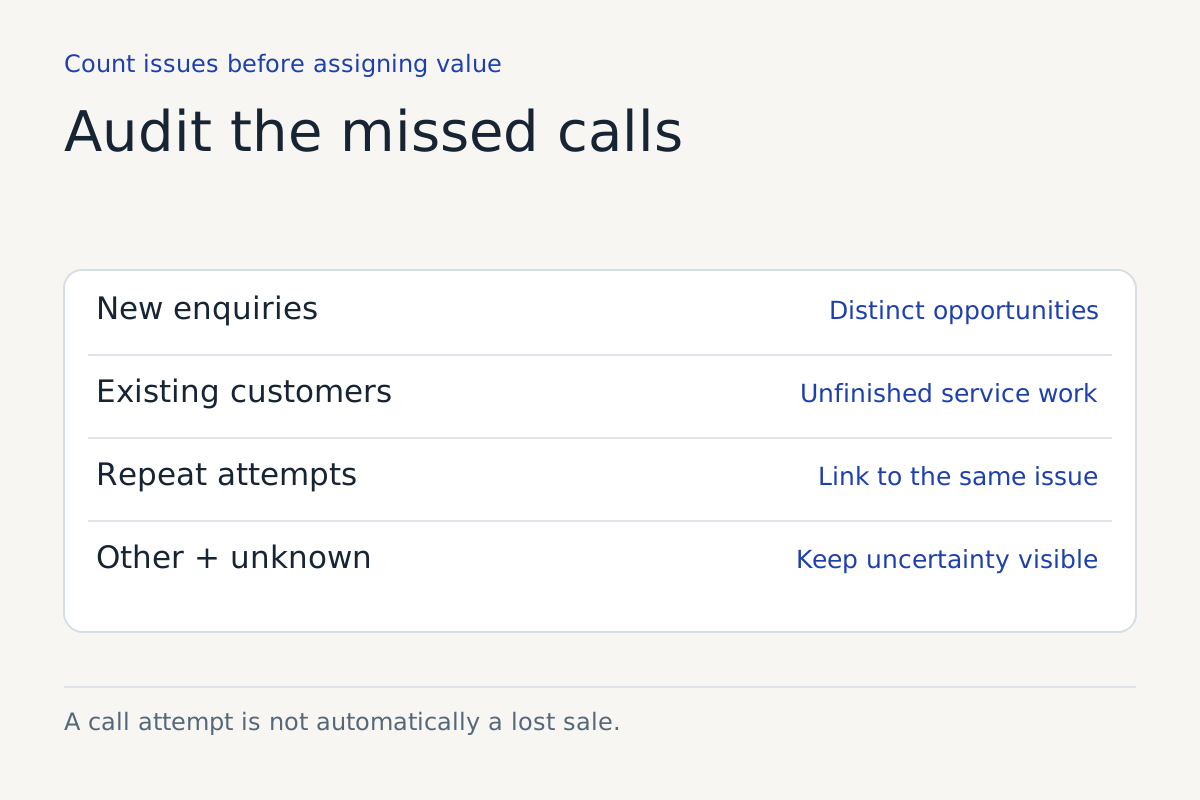
A missed-call count looks like a business case waiting to happen. Multiply the calls by an assumed sale value and the potential return appears impressive. The calculation usually skips the most important question: what were the calls actually about?
Some were new enquiries. Others were existing customers, repeat attempts about the same issue, suppliers, wrong numbers, or unwanted calls. A call log records attempts, not automatically distinct opportunities. Before buying coverage, inspect the work those attempts represent.
The audit below is an original method. It uses a hypothetical example to show the arithmetic and makes no claim about typical call volumes, conversion, or revenue.
Choose a bounded sample
Pick a period that includes ordinary operating conditions and the hours you are considering covering. Record which period you chose and why. If the period includes an unusual closure or promotion, preserve that context rather than treating it as a normal baseline.
Use the data the business is permitted to review. You may have call logs, voicemail, contact records, and staff notes. A call with no message may remain unknown. Do not invent intent from the caller's number or a vague account match.
Where possible, link attempts about the same issue. A person who calls repeatedly because nobody answers should count as repeated contact attached to one unresolved issue. Keep both measures: attempts describe demand on the channel; distinct issues describe the work to recover.
Tag the work, not just the caller
For each distinct issue, record the reason for contact, whether the business could have handled it at that time, and what happened afterward. A new enquiry outside the service area represents different work from an existing customer's urgent callback request.
| Audit field | Useful values or evidence |
|---|---|
| Contact purpose | New enquiry, existing work, supplier, incorrect number, unwanted, unknown |
| Repetition | First attempt or linked repeat attempt |
| Timing | During staffed hours or outside them |
| Next action | Answer, callback, staff review, no action, unknown |
| Recovery evidence | Callback completed, appointment made, issue resolved, still pending |
| Coverage boundary | Could the proposed system actually handle this task? |
Keep a free-text note for unusual cases. The categories should help you make a decision, not force every contact into a flattering opportunity bucket.
Work through a hypothetical call log
Suppose an illustrative sample contains 120 missed attempts. After linking repeat attempts, the team identifies 90 distinct issues. The numbers below are invented solely to demonstrate the method.
| Distinct issue category | Hypothetical count |
|---|---|
| New enquiries | 24 |
| Existing customer work | 31 |
| Suppliers and administrative contacts | 12 |
| Incorrect numbers or unwanted contacts | 15 |
| Unknown purpose | 8 |
| Total distinct issues | 90 |
The difference between 120 attempts and 90 issues is 30 repeated attempts. That does not mean 30 sales were lost. It means repeated contact deserves investigation.
Now examine the 24 new enquiries. Some may already have reached staff through another channel. Some may be outside scope. Some may remain recoverable. Only after that review can the business build a defensible assumption about additional completed work.
Existing-customer calls also have value, but a different value. Better handling may reduce repeated contact or prevent a service failure. Do not force those benefits into a new-sale calculation merely because the revenue column is convenient.
Trace recovery before calling a contact lost
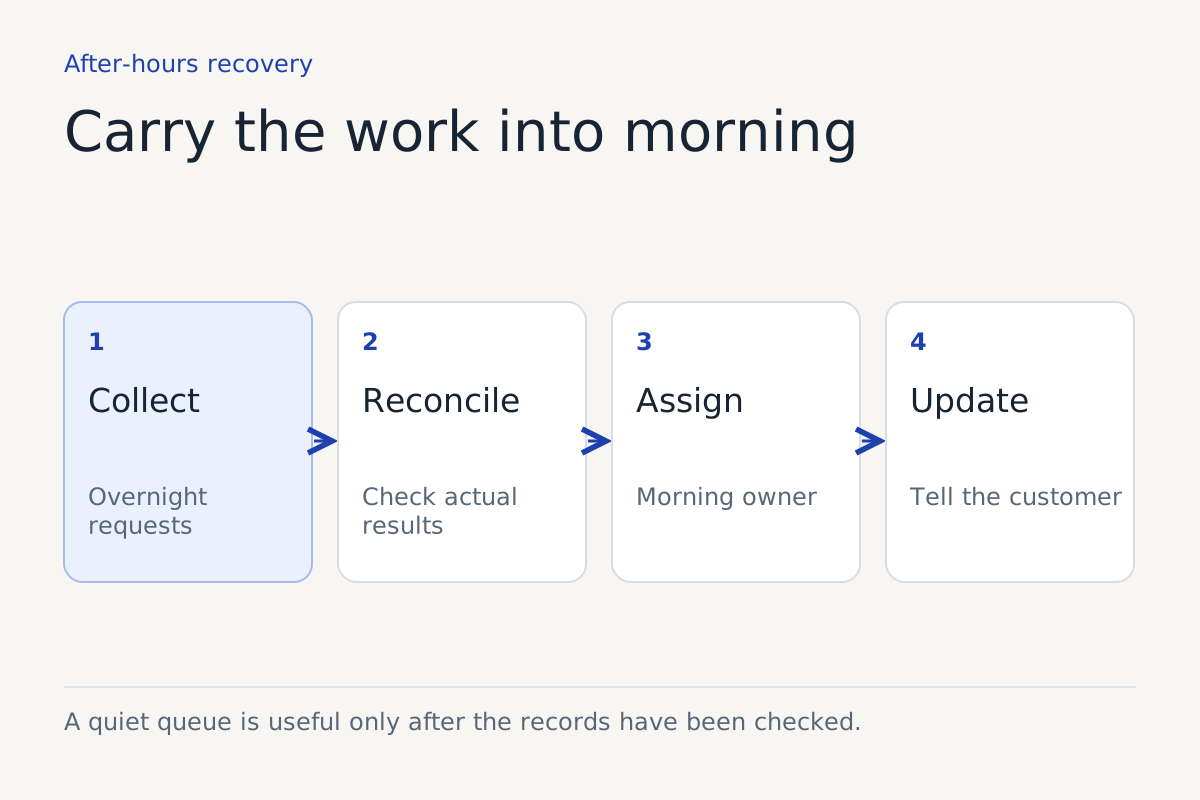
A missed call may lead to a voicemail, a later answered call, an email, or a completed booking. Search the approved records for those outcomes before classifying the issue as lost.
Use a clear outcome window appropriate to the business. An appointment request and a complex project enquiry may take different amounts of time to reach a decision. Record unresolved cases as pending when the window has not closed.
If staff currently call back informally, the audit may reveal a measurement gap rather than a coverage gap. Fix the recovery record so future decisions can distinguish work completed by staff from work that never acquired an owner.
Choose the intervention from the pattern
If missed calls cluster during a short lunch closure, the business may need a clearer callback process or a modest staffing change. If callers repeatedly ask the same approved factual questions, a better information page or structured answer path may help.
If new enquiries arrive outside staffed hours and can be handled through bounded intake, an assistant might be useful. If most calls require professional judgment or live dispatch decisions, automated answering still needs an available person and a reliable escalation process.
First Round's public CX interview illustrates operational attention to customer contact patterns. This audit applies that general idea to a local decision; it does not borrow the featured company's results as a benchmark.
Estimate value without inventing a multiplier
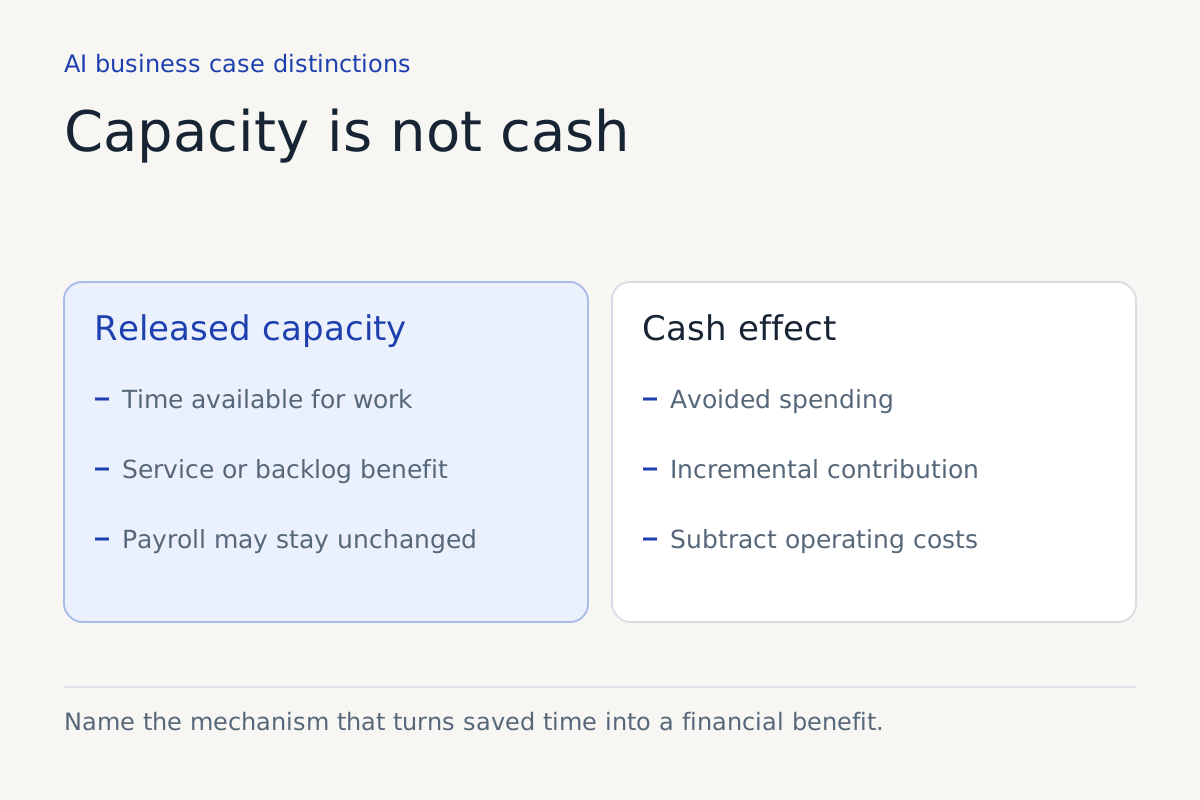
Build separate lines for additional contribution, reduced repeat work, and improved service recovery. For any revenue estimate, show the chain: eligible distinct enquiries, plausible additional completed jobs, and contribution after variable costs.
Use low and high assumptions where evidence is incomplete. Explain what would make an enquiry incremental rather than merely handled through a new channel. Subtract software, integration, review, and exception-handling costs.
Do not value every missed attempt at the average sale. That assumes every caller was a buyer, every attempt was unique, every sale was otherwise lost, and the assistant would capture all of them. The audit exists to replace those assumptions with evidence.
Recheck the same categories after a pilot
Keep the original definitions when comparing the pilot with the baseline. Measure distinct issues, repeat attempts, recovery, and unresolved work. Include staff callbacks and corrections generated by the new system.
The decision should become clearer: which customer work improved, what it cost to improve it, and which calls still need another operating answer. That is a stronger basis for coverage than a large missed-call number with a price attached.
Keep reading